For decades, fashion rules insisted that gold and silver should never mix. You either belonged to “gold people” or “silver people,” and combining the two was considered a styling mistake. That rule is officially outdated. Mixed-metal jewelry is now one of the most popular trends in accessorizing, and when done correctly, it can look more intentional and modern than sticking to a single tone. The key is knowing how to balance the two metals in a way that flatters your specific skin undertone.
If you haven’t yet figured out whether you lean warm, cool, or neutral, it’s worth starting with our guide on how to tell your skin undertone before diving into mixed-metal styling. Understanding your undertone will help you decide which metal to lead with, even when you’re wearing both.
Why Mixing Metals Works
The rise of mixed-metal jewelry isn’t just a trend—it’s a reflection of how personal style has evolved. Jewelry today is less about matching a strict dress code and more about layering pieces that tell a story, whether that’s a vintage gold ring passed down from a grandmother or a sleek silver watch worn every day. Designers have caught on, releasing collections that intentionally combine tones in the same piece, from two-tone watches to necklaces with alternating gold and silver links.
From a color theory perspective, gold and silver aren’t as opposed as we once thought. Gold has warm, yellow undertones, while silver has cool, blue-white undertones. When paired thoughtfully, they create contrast and visual interest rather than clashing, much like pairing a warm and cool color in an outfit. As covered in our guide to gold vs. silver and skin tone, the right metal enhances your natural coloring—but mixing metals means you get to enhance multiple parts of your look at once.
Does Your Skin Tone Still Matter When Mixing Metals?
Yes, but it plays a different role than when you’re choosing a single metal. Instead of asking “which metal suits me best,” you’re now asking “which metal should dominate my look.” Your undertone determines the ratio of gold to silver that will feel most harmonious against your skin.
Neutral Undertones
If you have a neutral undertone, you’ve essentially won the jewelry lottery. Both gold and silver look equally good against your skin, which means you can mix them in any proportion without worrying about clashing. A 50/50 split, like a gold necklace paired with silver earrings, will look intentional and balanced.
Warm Undertones
Warm-toned individuals generally look best when gold is the dominant metal. When mixing, aim for a ratio of about 70% gold to 30% silver. This might mean wearing a statement gold necklace with a single silver ring, or a gold watch paired with silver stud earrings. The gold will sit closer to your face and larger body areas, while silver adds subtle contrast in smaller accents.
Cool Undertones
Cool-toned individuals should flip that ratio, leaning roughly 70% silver to 30% gold. Silver jewelry near the face—earrings, necklaces—will brighten your complexion, while a gold bracelet or ring can add warmth without overwhelming your natural coloring.
Practical Styling Combinations
Once you know your ideal ratio, it’s time to think about placement. Mixed-metal styling works best when it looks deliberate rather than accidental. Here are a few tried-and-true combinations:
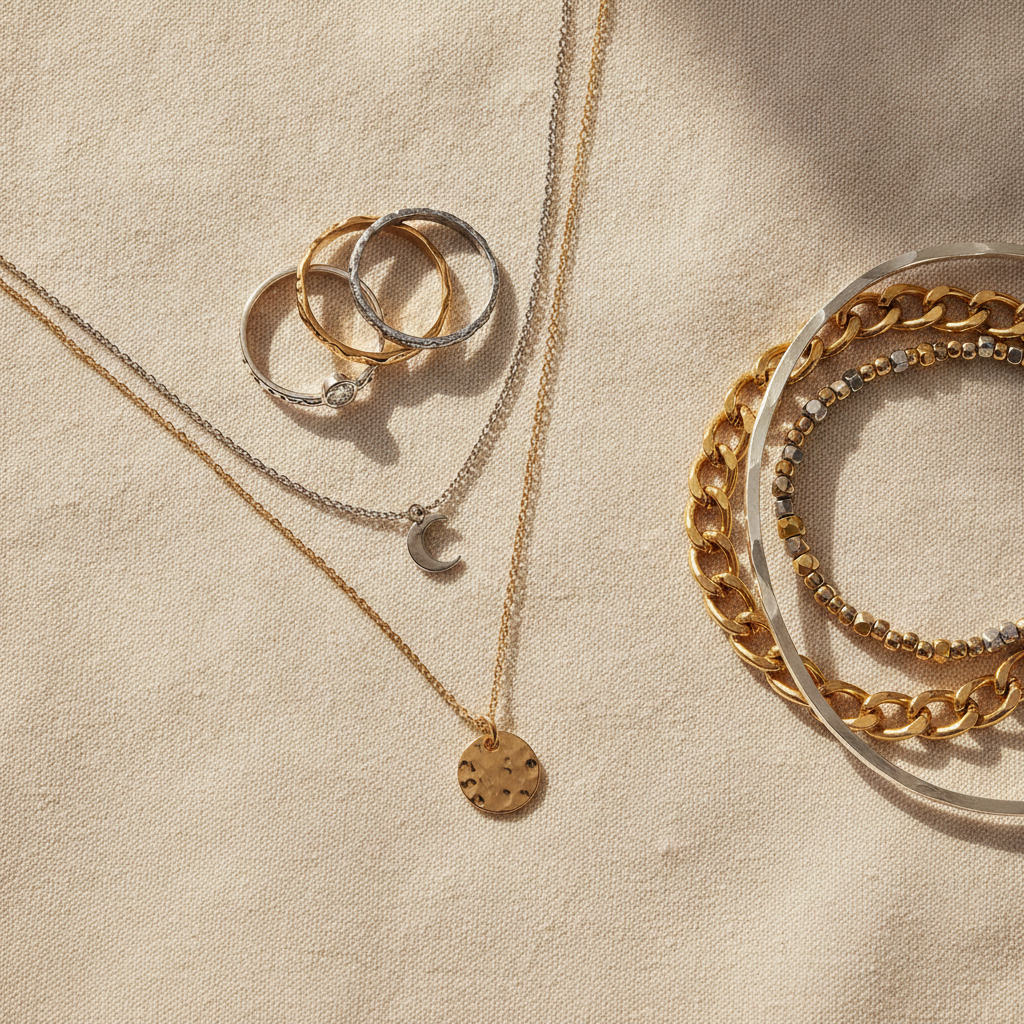
- Necklace layering: Combine a delicate gold chain with a slightly longer silver pendant necklace. The varying lengths and textures create depth, and the mixed metals feel curated rather than mismatched.
- Stacked rings: Wear two or three rings of your dominant metal on one hand, and a single ring of the secondary metal on the other. This keeps the eye moving without creating visual competition on one finger.
- Ear stacking: Use one ear for your dominant metal (three small gold hoops, for example) and the other ear for one accent piece in silver. This asymmetrical approach is a favorite among stylists for its editorial, modern feel.
- Watch and bracelet combos: A gold watch paired with a silver bangle (or vice versa) on the same wrist is a classic, low-commitment way to test mixed metals before going all-in.
Celebrity and Fashion-Forward Inspiration
Mixed-metal styling has become a staple on red carpets and street style alike. Many stylists intentionally pair a warm-toned gold cuff with cool-toned silver drop earrings to create contrast that draws the eye without overwhelming an outfit. Fashion influencers have also popularized the “metal stacking” trend, where multiple thin rings and bracelets in different tones are worn together for a bohemian, collected-over-time aesthetic.
What ties these looks together isn’t randomness—it’s ratio and intention. A dominant metal anchors the outfit, while the secondary metal is used sparingly as an accent, whether that’s a single ring, a pair of earrings, or a delicate chain layered underneath a more prominent piece.
Common Mistakes to Avoid
The most common misstep when mixing metals is an even, chaotic distribution with no clear focal point—think five gold and five silver pieces worn all at once with no cohesive plan. Another mistake is ignoring texture and finish; mixing a glossy gold piece with a matte silver one can look unintentional unless done carefully. Finally, forgetting your undertone entirely and defaulting to a 50/50 mix when you’re strongly warm or cool can wash out or overpower your complexion rather than complementing it.
Final Thoughts
Mixing gold and silver jewelry isn’t just allowed—it’s a smart, modern way to build a more versatile jewelry collection. By understanding your skin undertone and applying the right ratio, you can wear both metals confidently without worrying about clashing. Start small with a two-tone watch or a single accent ring, and build your mixed-metal confidence from there.