There’s something undeniably satisfying about the gentle clink of bangles or the soft weight of a well-composed wrist stack. Bracelet stacking, often called an “arm party,” is one of the most expressive ways to showcase personal style. Unlike a single statement piece, a stack tells a story through layers, textures, and even sound. This guide breaks down exactly how to stack bracelets so they look intentional, feel comfortable, and work for any occasion.
Why Bracelet Stacking Is Different From Other Jewelry Layering
While necklace and ring stacking rely heavily on visual balance, bracelet stacking adds another sensory dimension: sound. The gentle chime of metal bangles hitting each other, the soft rattle of beads, or the quiet slide of a chain bracelet all contribute to the experience of wearing a stack. This means building a wrist stack isn’t just about how it looks in a photo, it’s about how it feels and sounds throughout your day.
As with the broader principles covered in our guide to The Art of Layering: How to Stack Jewelry Like a Professional Stylist, the foundation of great bracelet stacking is contrast: mixing widths, textures, and finishes so each piece has room to shine rather than competing for attention.
Start With a Foundation Piece
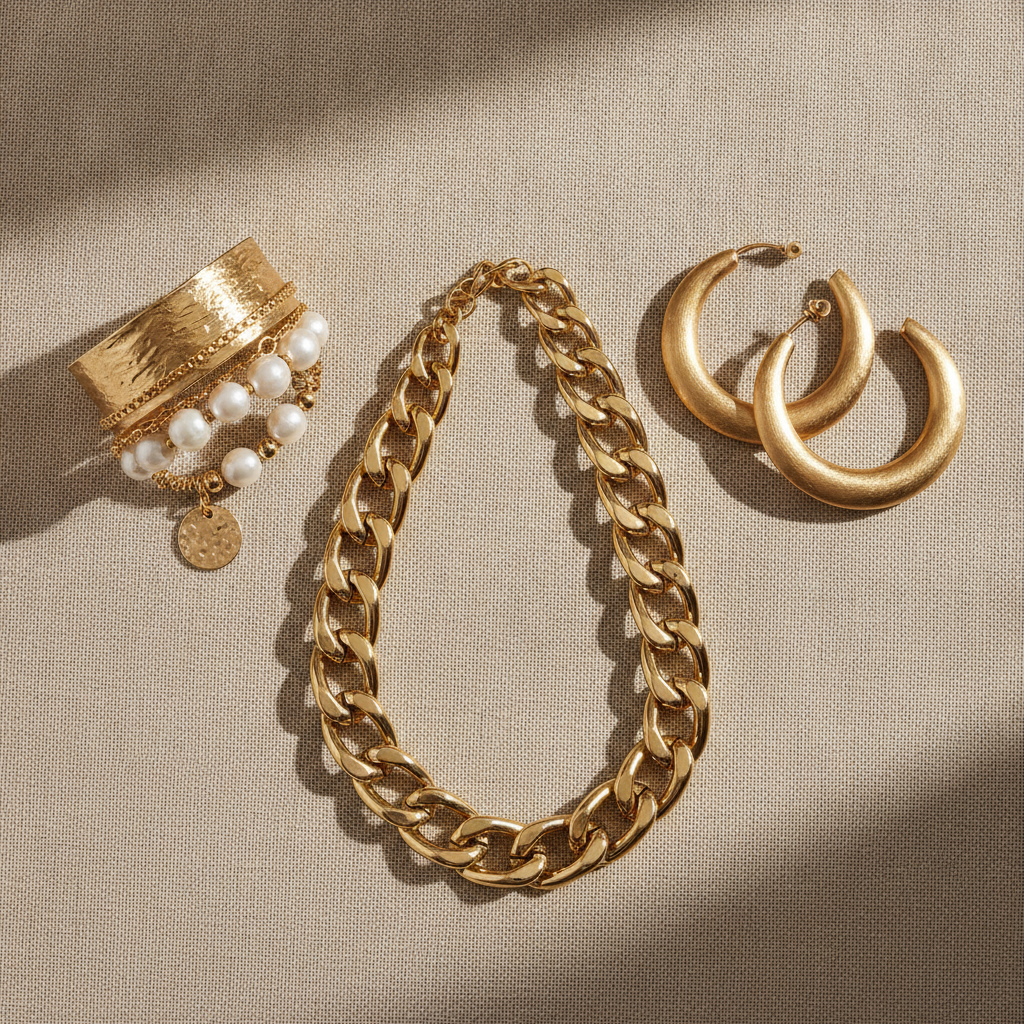
Every great stack begins with an anchor. This could be a wider cuff, a chunky chain bracelet, or a bangle with more visual weight than the rest. The foundation piece sets the tone for the entire stack and gives your eye a natural starting point.
Once you’ve chosen your anchor, build outward with progressively thinner or more delicate pieces. This creates a sense of visual movement, almost like the stack is cascading down your wrist rather than sitting in a flat, uniform row.
Popular Foundation Options
- A wide gold or silver cuff for a bold, sculptural base
- A chunky curb chain bracelet for an edgier foundation
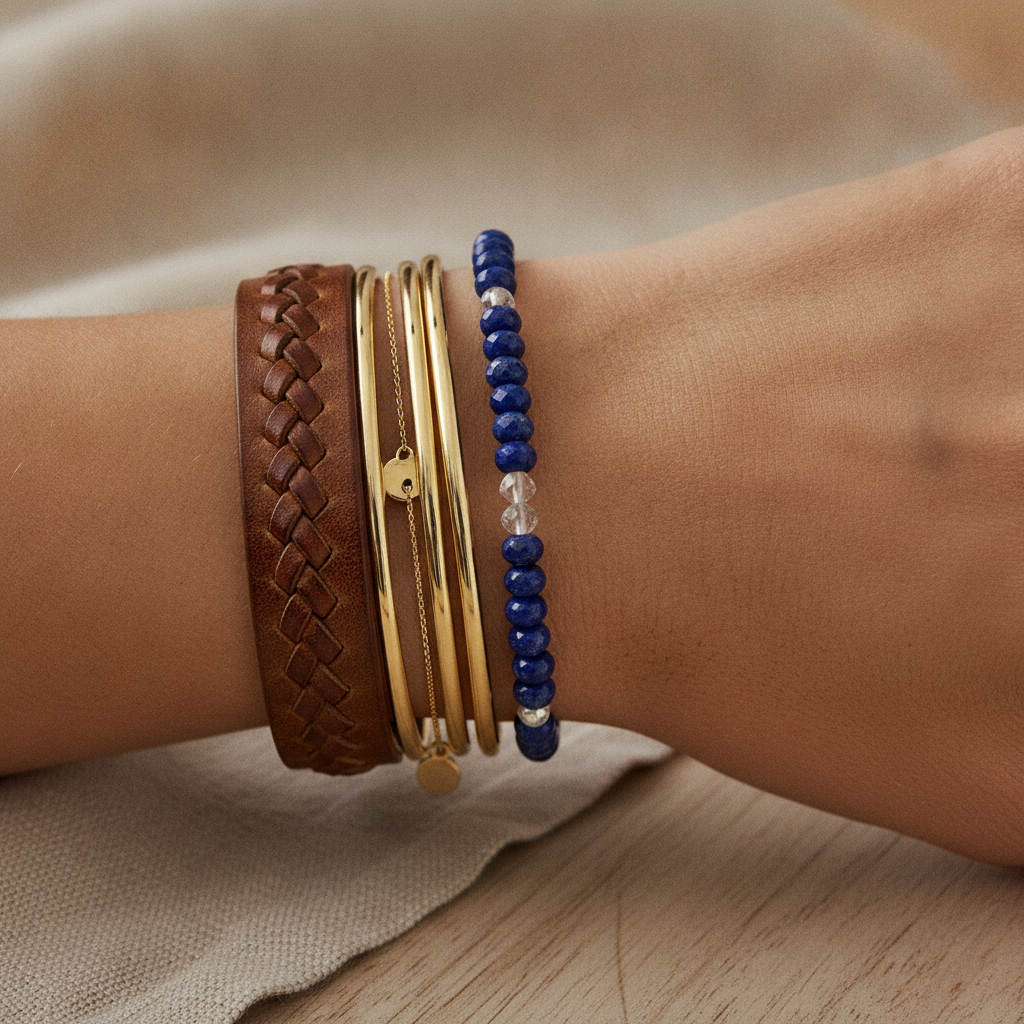
- A woven leather cuff for a more relaxed, everyday feel
Layering Bangles, Chains, and Beaded Pieces
The magic of a wrist stack lies in mixing categories rather than sticking to one type of bracelet. Combining bangles, chains, and beaded pieces creates depth and keeps the eye engaged.
Bangles: The Sound Makers
Bangles are the pieces most responsible for that signature jewelry sound. Stack two to four bangles of varying widths together, but keep them on the same wrist for maximum resonance. Mixing a slim bangle with a slightly wider one adds rhythm without overwhelming the arm.
Chain Bracelets: The Structure Builders
Chain bracelets add structure and can range from delicate paperclip chains to bold curb links. They pair beautifully with bangles because their flexibility contrasts with the bangle’s rigidity, giving the stack a more dynamic silhouette.
Beaded Bracelets: The Texture Softeners
Beaded pieces, whether gemstone, pearl, or wood, introduce color and organic texture. They soften the harder lines of metal bangles and chains, making the overall stack feel more layered and less uniform.
Spacing and Weight Distribution for Comfort
A stack that looks stunning but feels heavy or clunky won’t get worn for long. Pay attention to two key factors: spacing and weight distribution.
- Spacing: Leave a small gap between chunkier pieces so they can move independently rather than clanging awkwardly. Delicate chains can sit closer together since they naturally drape.
- Weight distribution: Place heavier bangles closer to the hand and lighter, more delicate pieces closer to the forearm. This keeps the stack from sliding uncomfortably or feeling top-heavy.
If you find a full stack too much for daily wear, consider distributing bracelets across both wrists. This is a simple trick that maintains visual balance while reducing weight and noise on any single arm.
Material Pairings That Work
Not every material combination reads as effortless. Some pairings naturally elevate each other, while others can feel mismatched. Here are combinations that consistently work:
- Leather and gold: The contrast between a matte leather cuff and a polished gold chain feels grounded yet refined.
- Beads and chains: Gemstone beads paired with fine gold or silver chains create an elegant, layered look with just enough texture.
- Mixed metals: Combining gold and silver bangles is more acceptable than ever. For guidance on balancing tones, see our piece on Mixing Metals in Jewelry: The Modern Rule-Breaker’s Guide to Gold and Silver.
- Pearls and delicate chains: A single pearl bracelet paired with thin gold chains adds a soft, romantic touch to an otherwise minimal stack.
Building a Stack That Transitions From Day to Night
One of the best things about mastering bracelet stacking is creating a base that works from morning meetings to evening plans. Start with a versatile daytime stack of two or three pieces, such as a leather cuff, a delicate chain, and a beaded bracelet in neutral tones.
When transitioning to evening, simply add one or two statement bangles or a sparkling chain bracelet. This layered approach means you’re not starting from scratch, you’re building on a foundation that already feels put-together.
Quick Transition Tips
- Keep a slim clutch or bag pocket stocked with one or two extra bangles for instant evening upgrades
- Choose a base stack in neutral metals so additional pieces blend seamlessly
- Swap a beaded bracelet for a metallic one to instantly dress up the wrist
Final Thoughts on Wrist Stacking
Learning how to stack bracelets is ultimately about experimentation. Start with a foundation piece, layer in contrasting textures and materials, and pay close attention to comfort and sound. Whether you prefer a minimal two-piece combination or a full arm party of bangles, chains, and beads, the goal is a stack that feels authentically yours and moves with you throughout the day.