Walk into any styling studio or scroll through the feed of your favorite fashion editor, and you’ll notice the same trend everywhere: jewelry is no longer worn one piece at a time. Layering has become the signature move of stylists who want to add personality, texture, and dimension to an outfit without saying a word. But there’s a fine line between an intentional, curated stack and a cluttered mess. Learning how to layer jewelry the right way is a skill, and like any skill, it’s built on a few core principles that professionals rely on again and again.
This guide breaks down those principles so you can start building your own layered look, whether you’re working with a few staple pieces or a jewelry box full of options.
Why Layering Is the Ultimate Style Statement
Layering jewelry isn’t just a trend, it’s a form of self-expression. A well-executed stack can transform a simple outfit into something that feels considered and personal. It allows you to mix sentimental pieces with statement finds, combine metals you love, and create a look that evolves as your style does. The best part? You don’t need an expensive collection to do it well. You need an understanding of proportion, balance, and intention.
The Foundations of Great Jewelry Layering
Before you start piling on necklaces, bracelets, and rings, it helps to understand the three principles that stylists use to keep a layered look polished rather than chaotic.
Proportion
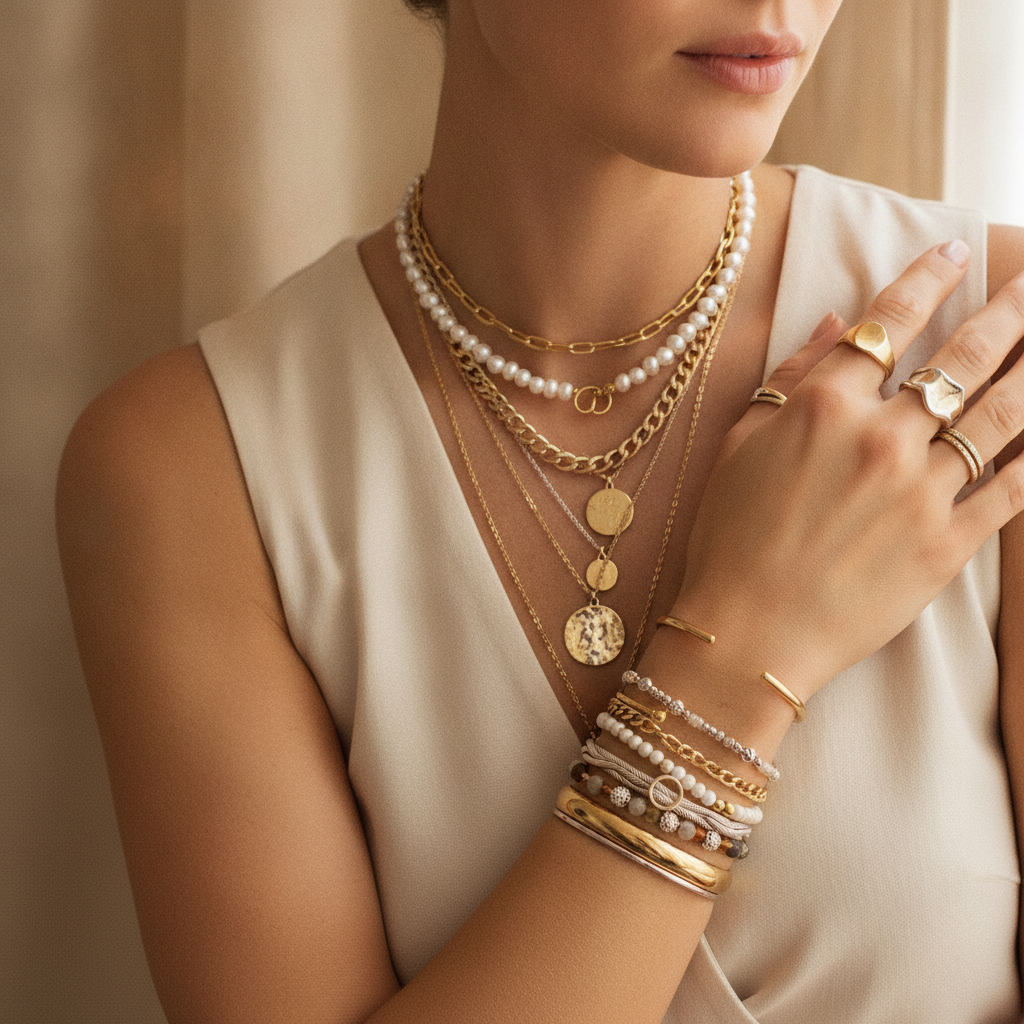
Proportion is about scale and spacing. When layering necklaces, this means choosing varied lengths so each piece has room to shine rather than bunching together at the same point on your chest. The same logic applies to rings and bracelets: vary the width and size of your pieces so your eye naturally moves across the stack instead of getting stuck in one spot. A good rule of thumb is to think in thirds, short, medium, and long, thick, medium, and delicate, so every piece has a clear visual role.
Metal Mixing
Gone are the days when your jewelry had to match perfectly. Modern layering embraces mixed metals, gold, silver, rose gold, and even mixed finishes, as a way to add depth and make a stack feel curated rather than matchy. The key is consistency in your ratio; for example, leaning 70% gold with 30% silver accents tends to look more intentional than a perfectly even split. For a deeper dive into this technique, our guide on mixing metals in jewelry covers exactly how to break the old rules with confidence.
Texture and Finish Balance
Texture is often the most overlooked layering principle, but it’s what separates an amateur stack from a stylist-approved one. Combine smooth chains with hammered or textured pieces, pair high-polish finishes with matte ones, and mix chunky links with fine, delicate strands. This contrast keeps the eye engaged and prevents your layered look from feeling flat or repetitive.
Layering Necklaces: Building Vertical Interest
Necklaces are often the starting point for most layering journeys, and for good reason, they frame the face and draw attention to the collarbone and neckline. The secret to a great necklace stack is choosing pieces with distinct lengths so each layer is visible rather than overlapping. A choker, a mid-length pendant, and a longer chain create a natural vertical rhythm that works with almost any neckline. If you want a detailed breakdown of exactly which lengths pair best together, our guide to necklace layering and the perfect combinations for every neckline walks through it step by step.
Stacking Rings: Small Details, Big Impact
Rings might be small, but a well-stacked hand can make just as much of a statement as a layered necklace. The trick is to avoid overcrowding one finger and instead distribute your rings across multiple fingers, mixing thin bands, statement pieces, and textured designs. Stylists often anchor a stack with one bold ring and build around it with slimmer, complementary pieces. For more specific guidance on mixing metals, sizes, and textures without overwhelming your hand, check out our article on stackable rings and how to mix metals, sizes, and textures.
Bracelet and Bangle Layering: Sound and Movement
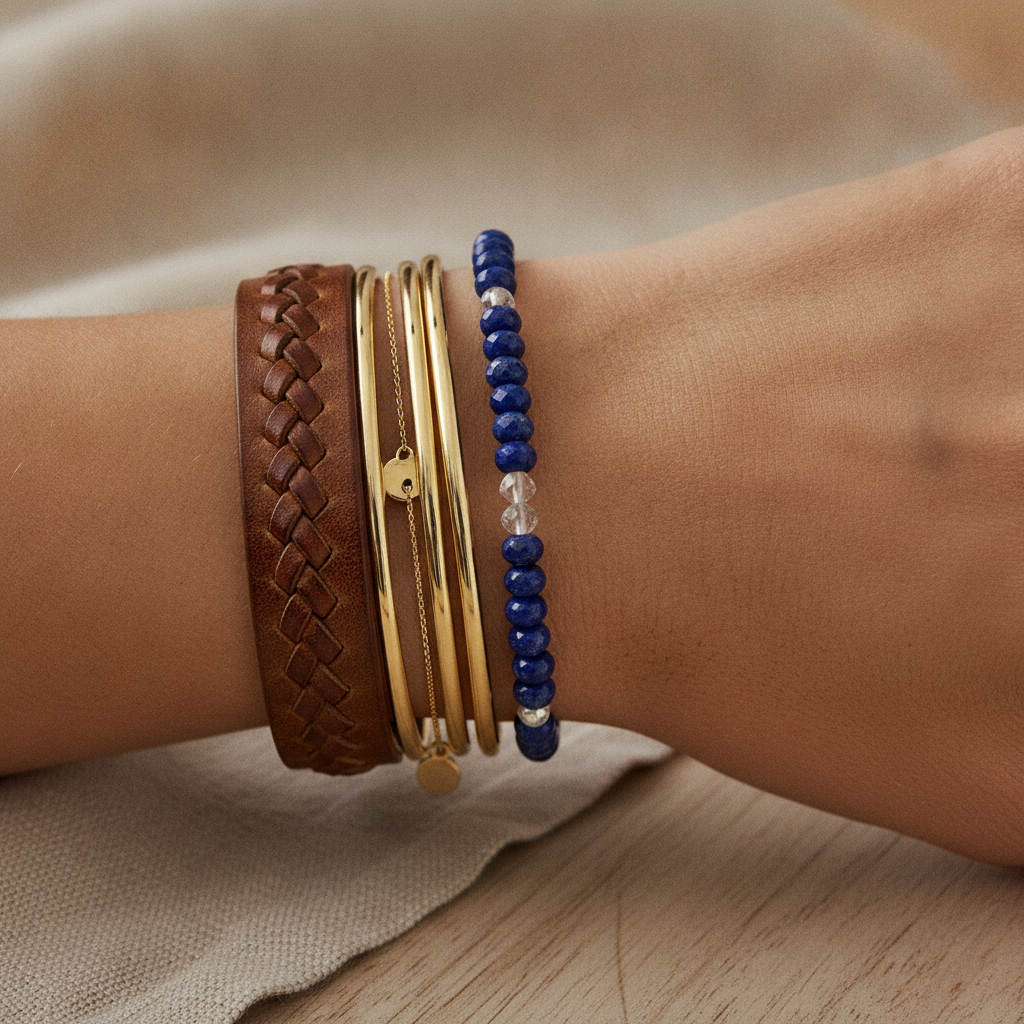
Your wrist is another prime canvas for layering, and unlike necklaces or rings, bracelets add an auditory element to your styling. The gentle clink of bangles or the soft chime of charms can become part of your personal signature. When stacking bracelets, vary the width and rigidity, mix a few thin bangles with a beaded piece or a chain bracelet to create both visual and textural contrast. Our guide on bracelet and bangle stacking goes deeper into creating that sense of movement and sound on your wrist.
Mixing Metals Like a Pro
One of the biggest shifts in modern jewelry styling is the freedom to combine gold and silver without hesitation. Stylists now treat metal mixing as an opportunity rather than a mistake, using it to make a stack feel more personal and less like a matched set from a store display. The key is to let one metal dominate slightly while the other plays a supporting role, this keeps the look cohesive rather than random. Whether you’re new to mixing metals or looking to refine your approach, this is a technique worth mastering early in your layering journey.
Building Your Signature Layered Look
The most memorable jewelry stacks aren’t copied from a magazine, they’re personal. Start by identifying a few pieces you already own and love, then build outward using the proportion, metal, and texture principles above. Add one new piece at a time rather than overhauling your entire collection at once. Over time, you’ll develop an instinct for what feels balanced on you specifically, and that instinct is ultimately more valuable than following any single rule.
Common Layering Mistakes to Avoid
- Matching lengths or sizes too closely: This causes pieces to overlap and lose their individual impact.
- Overloading one area: Too many rings on one finger or too many necklaces at the same length can look cluttered rather than curated.
- Ignoring texture: A stack made entirely of smooth, similar pieces can feel flat compared to one with varied finishes.
- Being afraid to mix metals: Sticking rigidly to one metal can limit your options and make your collection feel less versatile.
Final Thoughts
Learning how to layer jewelry is less about following strict rules and more about understanding the principles that make a stack feel intentional: proportion, texture, and thoughtful metal mixing. Start small, experiment often, and don’t be afraid to break convention once you understand the fundamentals. With a little practice, you’ll be building layered looks that feel entirely, unmistakably yours.