Layered necklaces are one of the easiest ways to elevate a simple outfit into something that looks intentional and polished. But there’s a difference between a curated stack and a tangled mess sitting at the base of your throat. The secret lies in understanding necklace lengths, knowing your neckline, and following a few simple styling formulas. This guide covers everything you need to layer necklaces with confidence, whether you’re dressing for the office, a night out, or a casual weekend.
Know Your Necklace Lengths
Before you can layer effectively, you need to understand the standard length categories. Each one sits differently on the body, and knowing these measurements makes it much easier to build a stack that looks balanced rather than chaotic.
Choker (14-16 inches)
Sitting snugly around the base of the neck, chokers are the shortest common length. They work beautifully as the top layer in a stack and pair well with off-the-shoulder tops or crew necks.
Princess (17-19 inches)
This is the most versatile length, typically landing at or just below the collarbone. A princess-length necklace is often the anchor piece in a layered look because it works with almost any neckline.
Matinee (20-24 inches)
Falling at or just above the bust, matinee-length necklaces add visual interest between your shorter and longer pieces. This length is particularly flattering with V-necks and button-down shirts.
Opera (28-36 inches)
The longest common length, opera necklaces fall at or below the bust line and can even be doubled for a shorter, more layered effect. They’re ideal for adding drama to simple outfits and work especially well with higher necklines.
The Rule of Three: A Simple Stacking Formula
Most stylists agree that three pieces is the sweet spot for necklace layering. Fewer than three can look sparse, while more than four or five risks looking cluttered unless you’re going for a deliberately maximalist effect.
A reliable formula is to combine one length from each category: a choker or princess piece close to the neck, a matinee-length piece in the middle, and a longer opera-length piece as the statement layer. This creates natural spacing and visual rhythm rather than pieces bunching together at the same point.
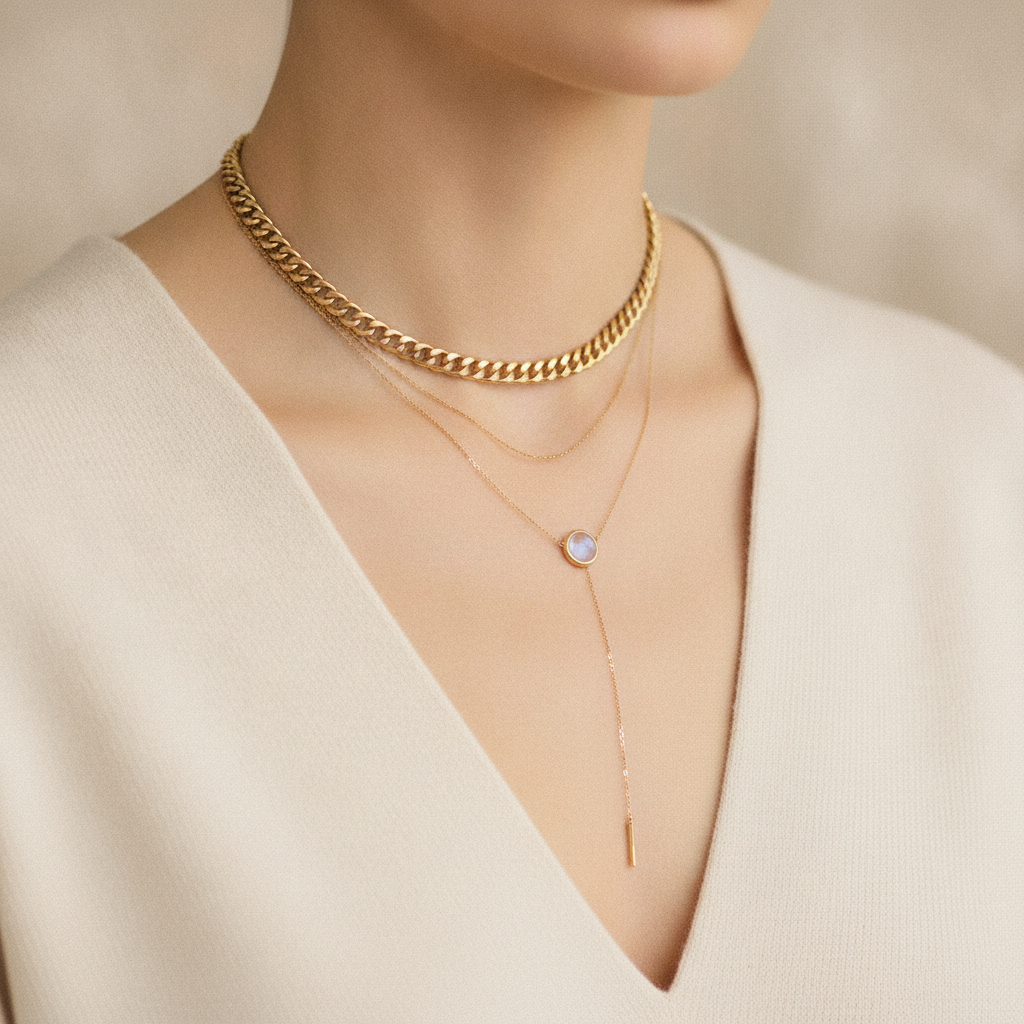
Just as with stackable rings, where you mix sizes and textures to avoid a flat look, necklaces benefit from variation in thickness and design. Pair a delicate chain with a pendant piece and a chunkier link chain to create dimension without overwhelming the eye.
Matching Lengths to Necklines
Your neckline should guide which necklace lengths you choose, since certain combinations naturally complement the shape of a garment.
Crew Neck and High Necklines
These necklines cover more skin, so shorter lengths like chokers can get lost or feel crowded. Instead, opt for a princess-length piece paired with a longer opera chain that falls below the collar for contrast.
V-Neck and Scoop Neck
These necklines are the easiest to layer with, since they expose the collarbone and upper chest. A classic three-piece stack of choker, princess, and matinee lengths follows the natural V shape and draws the eye downward elegantly.
Off-the-Shoulder and Strapless
With more skin exposed, this is your chance to experiment. A choker paired with a longer opera-length necklace creates striking negative space, while skipping the middle length keeps the look clean and intentional.
Turtlenecks and Collared Shirts
When fabric covers the neck, layer necklaces on top of the collar rather than underneath. Longer lengths like matinee and opera work best here, as they can rest visibly over the fabric.
Layering for Different Occasions
Casual Everyday Looks
For daytime wear, keep it simple with two or three thin chains in varying lengths, mixing a small pendant with plain chains. This creates an effortless, undone quality that still feels styled.
Work and Professional Settings
Office-appropriate layering tends to favor subtlety. Stick to two pieces in similar metal tones, such as a princess-length chain with a small pendant and a slightly longer matinee piece, avoiding anything too bold or noisy.
Evening and Special Occasions
This is where you can go bigger with texture and shine. Combine a statement choker with a longer beaded or gemstone opera necklace for drama that catches the light beautifully under evening lighting.
How to Avoid Tangling
Tangling is the most common frustration with layered necklaces, but a few simple habits can prevent it entirely.
- Vary the chain styles: Combining a flat chain, a beaded chain, and a fine cable chain reduces the friction that causes tangling compared to using identical chain types.
- Use clasp extenders: Small connector clasps, sometimes called necklace detangler clips, hold multiple chains together at the back so they move as one unit instead of sliding around independently.
- Store necklaces separately: Hang each piece individually on a jewelry stand or hook rather than tossing them together in a drawer, which is often where tangles begin before you even put them on.
- Put necklaces on in order: Start with the longest piece first and work your way up to the shortest, laying each one flat against your chest before adding the next.
Mixing Metals and Textures in Your Stack
Gone are the days when jewelry needed to match perfectly. As explored in our guide to mixing metals, combining gold and silver pieces in a single stack can look intentional and modern rather than mismatched, as long as there’s a common thread tying the pieces together, such as similar pendant shapes or chain widths.
Texture also plays a role in a successful necklace stack. Pairing a smooth chain with a textured or hammered piece, or mixing in a beaded necklace, adds depth the same way stacked bracelets create movement, a concept covered further in our piece on bracelet and bangle stacking.
Final Tips for a Polished Layered Look
Start with a statement piece you love and build the rest of your stack around it. Keep pendant sizes graduated so the largest sits lowest, and don’t be afraid to remove a piece if the overall look starts to feel busy. Layering necklaces is ultimately about balance, and once you understand the mechanics of length and spacing, you can mix and match with confidence for any neckline or occasion.