Deciding between costume and fine jewelry isn’t just about budget—it’s about matching the right piece to the right moment. Wear the wrong one, and you risk looking underdressed, overdressed, or unnecessarily anxious about losing a valuable heirloom. If you already know the fundamental differences between costume and fine jewelry, the next step is learning how to apply that knowledge to real-life situations. This guide walks through the most common occasions you’ll face and offers clear, practical recommendations for each.
A Quick Refresher Before You Choose
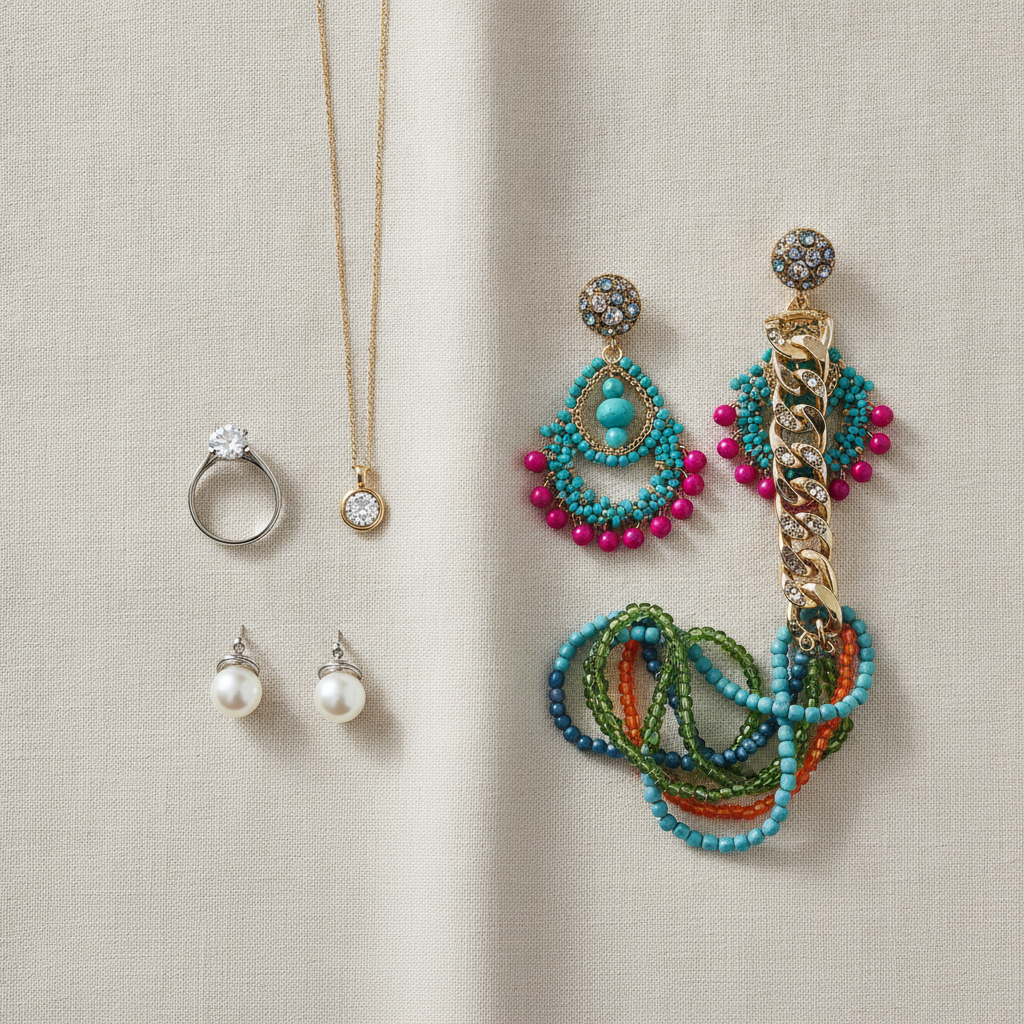
Fine jewelry is made from precious metals like gold, platinum, or sterling silver, and typically features genuine gemstones. It’s durable, holds value, and is often designed to be worn for a lifetime. Costume jewelry, on the other hand, is crafted from base metals, glass, acrylic, or simulated stones. It’s generally more affordable, bolder in design, and meant to follow trends rather than outlast them. If you’re ever unsure which category a piece falls into, our jewelry identification guide can help you confirm before you plan your outfit around it.
Everyday Wear and Casual Outings
For running errands, grabbing coffee with friends, or heading to a casual lunch, costume jewelry is almost always the smarter choice. It lets you experiment with color, size, and trends without worrying about tarnishing, scratching, or losing something irreplaceable. A chunky resin bracelet or a pair of oversized hoops can add personality to a basic outfit without the stress of safeguarding fine pieces throughout the day.
Save your fine jewelry—think delicate gold chains or diamond studs—for moments when you want a subtle, polished touch that can be worn daily without drawing too much attention, such as at the office or during low-key social gatherings.
The Workplace and Job Interviews
Professional settings call for jewelry that feels intentional but not distracting. For job interviews, fine jewelry in simple, understated designs communicates professionalism and attention to detail. A pair of small gold or pearl earrings, a thin necklace, or a classic watch works well because these pieces rarely clash with formal attire and won’t create noise or movement during a conversation.
That said, well-made costume jewelry can also work in the office, especially in creative industries where personal style is encouraged. The key is choosing pieces that look refined rather than flashy—avoid anything with loose stones, excessive sparkle, or overly trendy shapes that might undercut a polished, competent image.
Travel Jewelry: Leave the Fine Pieces at Home
Travel is one of the clearest cases for costume jewelry. Airports, hotel rooms, and unfamiliar destinations all carry a higher risk of loss or theft, and fine jewelry can be difficult or impossible to replace. Pack a small selection of costume pieces that mix and match easily with your travel wardrobe, allowing you to feel put-together without carrying anything irreplaceable.
If you do want to bring a meaningful fine jewelry piece, such as a wedding ring, keep it on your body rather than in checked luggage, and consider travel insurance for added peace of mind.
Weddings: As a Guest or the Bride
Wedding guests generally have more flexibility here. Costume jewelry can be a great option if you want to coordinate with a specific dress color or follow a bold trend for the occasion, since many wedding looks are worn once and then retired. Fine jewelry, meanwhile, adds a timeless elegance that photographs beautifully and never feels dated in future photos.
For brides, fine jewelry is traditionally favored, especially for pieces meant to become heirlooms or hold sentimental value. Pearl earrings, a delicate diamond necklace, or a family bracelet often headline bridal looks. However, high-quality costume jewelry has become increasingly popular for statement bridal pieces, like elaborate hair accessories or oversized earrings, since it allows for dramatic design without dramatic cost.
Black-Tie Galas and Formal Events
Black-tie events call for jewelry with genuine presence, and this is where fine jewelry traditionally shines. Diamonds, precious gemstones, and gold or platinum settings complement formal gowns and tuxedos with a level of luster that’s hard to replicate. If you own fine pieces, a gala is the ideal setting to wear them.
That said, high-end costume jewelry—particularly vintage or designer pieces—can hold its own at formal events, especially when the design is substantial and well-crafted. The goal is to choose pieces that look intentional and expensive, regardless of their actual material, and avoid anything that looks flimsy or overly casual under bright lighting.
Milestone Gifts and Sentimental Occasions
Anniversaries, engagements, and other milestone celebrations are moments where fine jewelry typically makes the most sense. These pieces are meant to be kept and passed down, carrying emotional as well as monetary value. A fine jewelry gift signals permanence and significance in a way costume jewelry generally cannot replicate.
Mixing Costume and Fine Jewelry Like a Pro
You don’t have to choose exclusively one or the other. Many stylish looks combine both categories seamlessly. A common approach is to layer a fine gold chain with a costume statement necklace, or pair fine stud earrings with a bold costume cocktail ring. The trick is balance: let one piece take center stage while the others play a supporting role, and keep metal tones consistent so the mix feels cohesive rather than mismatched.
A Few Etiquette Notes to Keep in Mind
Some settings carry unspoken expectations. Funerals and religious ceremonies generally call for minimal, understated jewelry, whether fine or costume. Job interviews favor subtlety over statement pieces. And when attending events with a specific dress code, it’s worth considering how your jewelry choice supports—rather than competes with—the formality of the occasion.
Final Thoughts
Ultimately, knowing when to wear costume jewelry versus fine jewelry comes down to reading the occasion, understanding the risks involved, and choosing pieces that align with the moment’s tone. Costume jewelry offers freedom, affordability, and trend flexibility for everyday life and travel, while fine jewelry brings lasting value and elegance to milestones and formal events. With a little planning, you can build a versatile collection of both—ready for whatever the calendar brings.