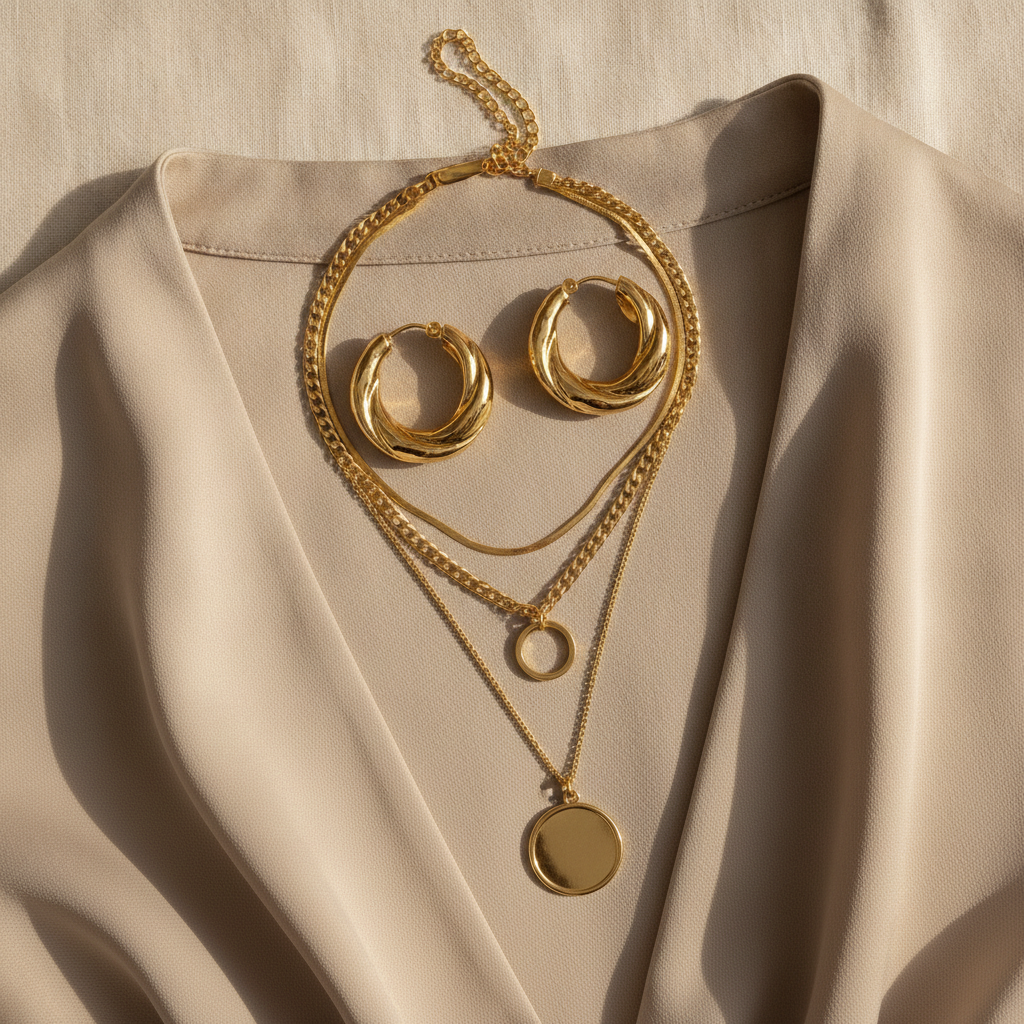
For decades, jewelry etiquette insisted on one unbreakable rule: never mix your metals. Gold jewelry stayed with gold, silver stayed with silver, and crossing the streams was considered a styling mistake. Today, that rule has been thoroughly retired. Mixing metals jewelry has become one of the most celebrated techniques among stylists, editors, and everyday jewelry lovers who want their accessories to look curated rather than matched from a single set. This guide breaks down why the trend works, how to do it with confidence, and the small tricks that separate an intentional mix from an accidental mismatch.
Why Mixing Metals Became a Styling Staple
The shift away from matching metals reflects a broader change in how people build their jewelry collections. Instead of buying a single set and replacing it wholesale when trends shift, most of us accumulate pieces over years, gifts, travels, and personal milestones. A gold signet ring from a grandmother, a silver chain from a first solo trip, a rose gold watch from a partner. Mixing metals jewelry allows all of these pieces to coexist naturally, telling a more personal story than a matched set ever could.
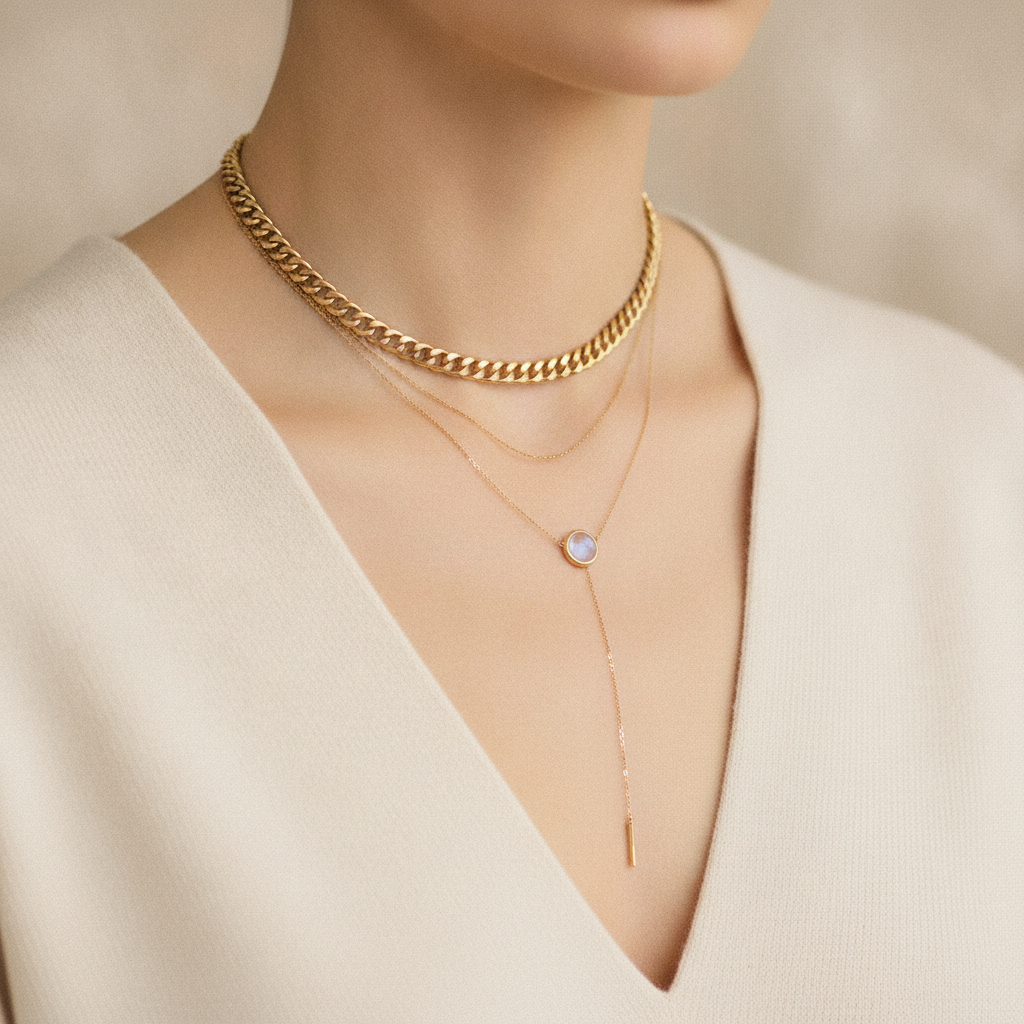
Stylists also point out that mixed metals photograph and wear better in real life because they mimic the way light naturally hits skin, hair, and fabric with varying warmth. A single metal tone can look flat, while a mix creates dimension and movement, especially when layering multiple pieces, a technique we explore in depth in The Art of Layering: How to Stack Jewelry Like a Professional Stylist.
The Old Rule vs. The New Reality
The traditional rule of matching metals came from an era when jewelry wardrobes were smaller and more formal, often centered around one or two “good” pieces meant to last a lifetime. As fashion became more expressive and jewelry more accessible, the rigid rule stopped reflecting how people actually dress. Professional stylists now treat metal mixing the same way they treat mixing patterns or textures in an outfit: as an opportunity for contrast rather than a hazard to avoid.
What Stylists Actually Say
Ask any working stylist and they’ll tell you the same thing: the goal isn’t to avoid mixing metals, it’s to mix them with intention. That means considering proportion, balance, and the overall palette of an outfit, not just grabbing every piece in your jewelry box at once. The most photographed mixed-metal looks on runways and red carpets tend to follow a few consistent principles, which we’ll break down below.
How to Balance Gold, Silver, and Rose Gold
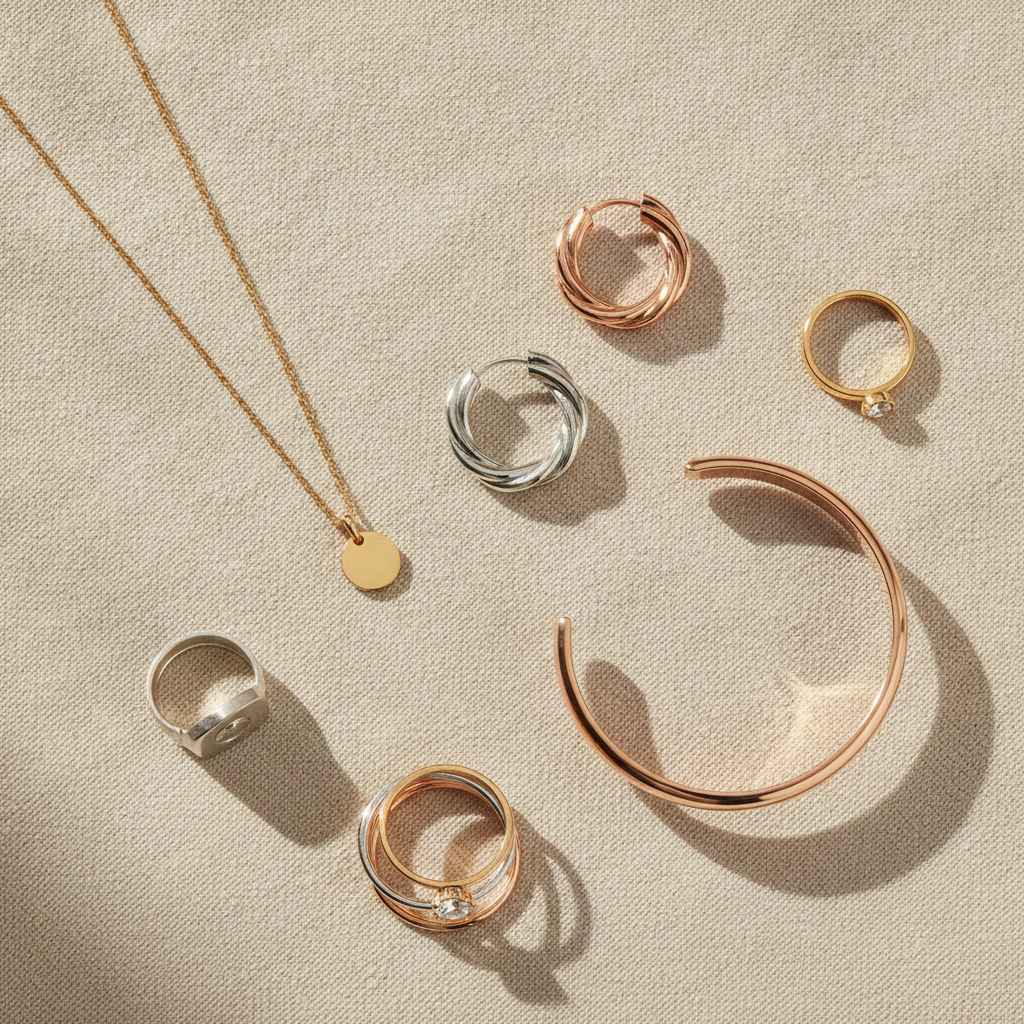
Successful metal mixing usually comes down to ratio rather than randomness. Instead of wearing an equal amount of each metal, choose one dominant tone and use the others as accents. This creates a cohesive look rather than a scattered one.
- Pick a dominant metal: Let one tone, say gold, make up roughly 60-70% of your jewelry for the day, with silver or rose gold filling in the rest.
- Repeat each metal at least twice: A single lonely silver ring among all-gold pieces can look accidental. Repeating each metal tone in at least two spots (like earrings and a bracelet) makes the mix look deliberate.
- Use one piece as the bridge: A two-tone necklace or ring that combines gold and silver in a single piece acts as a visual anchor, tying the rest of your jewelry together.
- Vary the finish, not just the color: Pairing a matte silver band with a high-shine gold cuff adds another layer of contrast that reads as intentional styling rather than mismatched drawers.
Using Neutral Pieces as Anchors
Neutral, low-key pieces, think a thin chain, a simple hoop, or a slim band, are invaluable when mixing metals because they don’t compete with statement pieces in a different tone. Building an outfit around one or two anchor pieces and layering bolder mixed-metal items around them keeps the overall look grounded. This same anchoring principle applies well to rings, as detailed in our guide to Stackable Rings: How to Mix Metals, Sizes, and Textures Without Overdoing It.
Matching Mixed Metals to Skin Tone and Wardrobe
While mixing metals gives you far more freedom, it still helps to understand which tones naturally complement your skin and your closet. Warmer skin tones tend to glow next to gold and rose gold, while cooler skin tones often look luminous in silver and white gold. The good news is that mixing metals lets you lean into your dominant flattering tone while still incorporating the other for contrast and interest.
Your wardrobe palette matters too. If you mostly wear warm neutrals, olive, camel, cream, a gold-dominant mix with silver accents will feel harmonious. If your closet leans cool, black, navy, gray, a silver-forward mix with gold accents can add warmth without overwhelming the look. Rose gold is the most versatile of the three and often works as a bridge tone between warm and cool palettes, making it an easy metal to introduce when you’re just starting to experiment.
Building a Mixed-Metal Capsule
If you’re transitioning from a matched jewelry box to a mixed one, start small. Add one rose gold or silver piece to your existing gold collection (or vice versa) and wear it for a week before adding more. This gradual approach helps you build confidence and figure out your personal ratio before committing to a full mixed-metal wardrobe. It also pairs well with building out your wrist stack, covered in our piece on Bracelet and Bangle Stacking: Creating Movement and Sound on Your Wrist.
Common Mixing Mistakes to Avoid
Even with the rules relaxed, a few missteps can make a mixed-metal look feel unfinished rather than intentional.
- Overcrowding without repetition: Wearing three different metals once each, with no repeats, can look chaotic rather than curated.
- Ignoring proportion: A tiny silver stud next to an oversized gold cuff can feel unbalanced; try to match the visual weight of pieces across metals.
- Forgetting the finish: Combining a very rustic, hammered texture with an ultra-polished, sleek piece in a different metal can clash if not balanced with the rest of the outfit.
- Skipping the anchor piece: Without at least one neutral or two-tone item, the mix can lack a unifying thread.
Final Thoughts on Mixing Metals Jewelry
Mixing metals jewelry isn’t a loophole or a trend that will fade, it’s a reflection of how modern jewelry wardrobes actually function: personal, layered, and built over time. By choosing a dominant tone, repeating metals across at least two pieces, and using neutral or two-tone items as anchors, you can wear gold, silver, and rose gold together with the same confidence a professional stylist would. Once you’ve mastered the basics here, explore how these same balancing principles apply to necklaces in our guide to Necklace Layering 101: The Perfect Lengths and Combinations for Every Neckline.