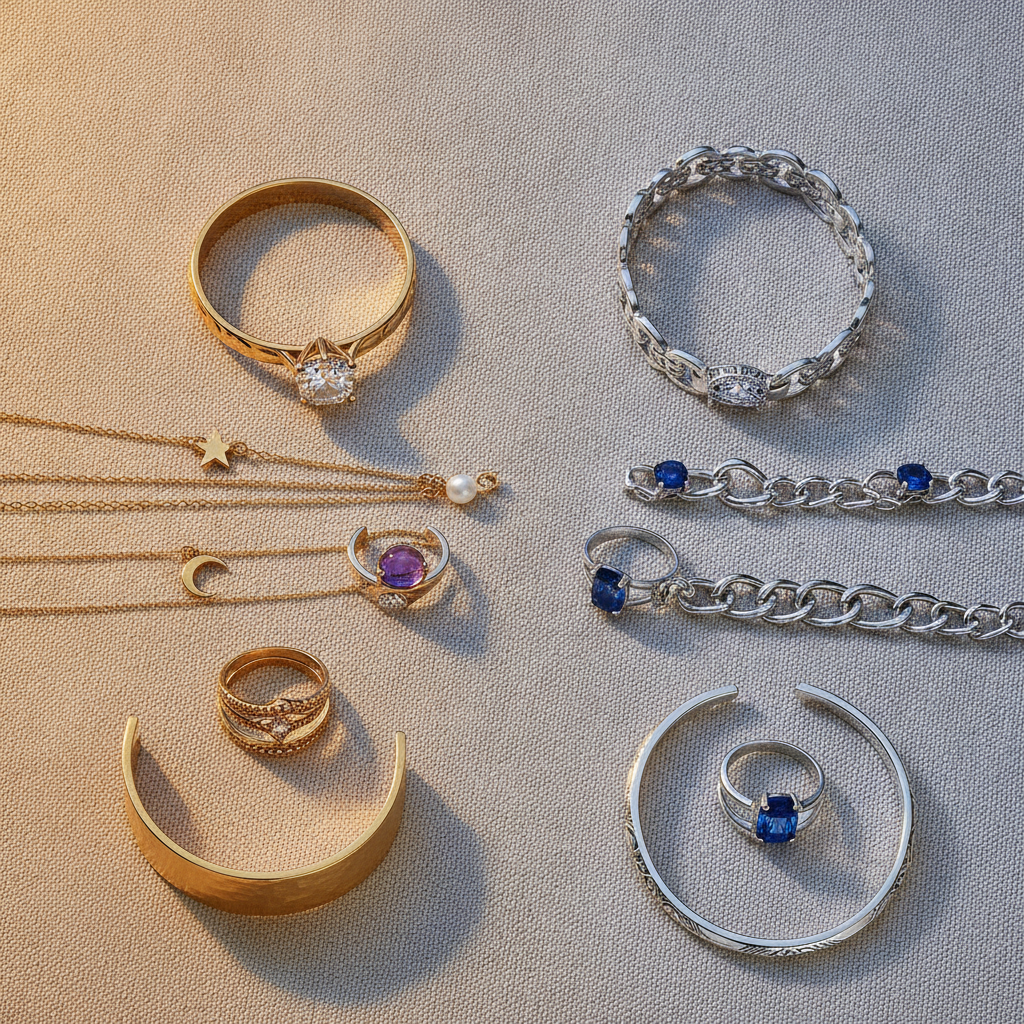
Standing in front of the jewelry counter with a gold bracelet in one hand and a silver one in the other is a familiar dilemma. Both look beautiful on the mannequin, but somehow one always seems to make your skin look more radiant while the other falls a bit flat. The secret isn’t about which metal is trendier—it’s about matching the metal to your unique skin undertone. Once you understand this simple concept, choosing jewelry becomes effortless.
In this guide, we’ll break down exactly how gold and silver interact with different skin tones, why undertones matter more than surface color, and how to build a jewelry collection that flatters you every time.
Why Undertone Matters More Than Surface Skin Color
Many people assume that fair skin pairs with silver and darker skin pairs with gold, but that’s a myth. Skin tone (how light or dark your skin appears) has almost nothing to do with which metal suits you best. What actually matters is your undertone—the subtle hue beneath the surface of your skin that stays constant regardless of tan lines or seasonal changes.
Undertones generally fall into three categories: warm, cool, and neutral. Warm undertones have hints of yellow, peach, or golden hues. Cool undertones lean pink, red, or bluish. Neutral undertones are a balanced mix of both, which is actually the most flexible category when it comes to metal choices.
Quick Ways to Identify Your Undertone
Before you can decide between gold and silver, you need to know your undertone. If you want a deep dive into every testing method available, check out our companion piece, How to Tell Your Skin Undertone: The Ultimate Test for Choosing Jewelry Metals. Here are the three fastest tests to get you started.
The Vein Test
Look at the veins on the inside of your wrist in natural light. Green veins typically indicate a warm undertone, while blue or purple veins suggest a cool undertone. If you genuinely can’t tell whether they’re blue or green, you likely have a neutral undertone.
The Sun Reaction Test
Think about how your skin reacts to sun exposure. If you tan easily and rarely burn, you probably have a warm undertone. If you burn quickly and tan minimally, cool undertones are more likely. Those who experience a bit of both usually fall into the neutral category.
The Jewelry Test
Hold a piece of gold jewelry and a piece of silver jewelry up to your face separately. If gold makes your skin look luminous and healthy, you’re likely warm-toned. If silver brightens your complexion and makes it look crisp, you’re probably cool-toned. If both look equally flattering, congratulations—you have a neutral undertone and can wear almost anything.
How Gold Complements Different Skin Tones
Gold jewelry, especially yellow gold, has a warm, rich glow that echoes the golden undertones found in warm-toned skin. It enhances peachy, olive, and golden complexions by creating a harmonious, sun-kissed effect. People with warm undertones often find that gold makes their skin appear healthier and more vibrant, almost as if it’s reflecting a bit of natural warmth back onto the face.
Interestingly, gold can also work beautifully on deeper skin tones regardless of undertone, thanks to the rich contrast it creates. Rose gold, a blend of gold and copper, is particularly versatile because its pinkish hue can bridge the gap between warm and neutral undertones, making it a popular choice for those unsure of their exact category.
How Silver Complements Different Skin Tones
Silver, platinum, and white gold have a cool, icy shine that pairs naturally with pink, red, or bluish undertones. On cool-toned skin, silver creates a crisp, clean contrast that makes the complexion look brighter and more polished. It has a modern, sleek quality that many people associate with sophistication and minimalism.
Fair skin with cool undertones tends to look especially striking in silver, as the metal’s brightness complements the skin’s natural coolness without clashing. However, silver isn’t exclusive to fair skin—cool undertones exist across the entire skin tone spectrum, from porcelain to deep espresso, and silver can look equally stunning on all of them.
The Psychology Behind Gold and Silver Choices
Beyond the physical science of undertones, there’s also a psychological element to metal preference. Gold is often associated with warmth, luxury, and tradition, evoking feelings of richness and history. Silver, on the other hand, is linked to modernity, clarity, and minimalism. Some people gravitate toward one metal simply because of the mood or personality it conveys, independent of how it interacts with their skin.
This is worth considering when building your jewelry wardrobe. While undertone matching will always make a piece look more flattering, personal style and the emotional resonance of a metal matter too. There’s no rule that says you must exclusively wear the metal that matches your undertone.
What If You Have a Neutral Undertone?
Neutral undertones are the lucky middle ground—both gold and silver tend to look great, giving you the freedom to choose based on outfit, occasion, or mood. If this describes you, consider investing in both metals rather than committing to just one. Layering delicate gold and silver pieces together has also become a major trend, and it works particularly well for neutral-toned individuals.
If you’re curious about combining metals regardless of your undertone, our related article, Can You Mix Gold and Silver Jewelry? Styling Rules for Every Skin Tone, offers practical styling rules to help you mix confidently without looking mismatched.
Building a Versatile Jewelry Wardrobe
Regardless of your undertone, it’s smart to own a mix of both metals. Trends shift, outfits vary, and personal style evolves over time. Here are a few tips for creating a well-rounded collection:
- Start with your dominant undertone: Invest in a few statement pieces in the metal that best complements your natural coloring.
- Add versatile mixed-metal pieces: Two-tone rings, bracelets, and necklaces bridge the gap and work with almost any outfit.
- Consider the occasion: Warmer, golden tones often suit evening and formal wear, while silver can feel fresh and appropriate for daytime or casual looks.
- Don’t ignore rose gold: Its versatility makes it a smart addition for those who want a metal that flatters multiple undertones.
Final Thoughts
Choosing between gold and silver doesn’t have to be a guessing game. By identifying your skin’s undertone through simple tests like the vein check, sun reaction, or a side-by-side jewelry comparison, you can make confident, informed decisions every time you shop. And remember, these are guidelines, not strict rules—ultimately, the best jewelry is the piece that makes you feel most like yourself.