
Before you buy another piece of jewelry, there’s one question worth answering first: what is your skin undertone? Unlike your surface skin color, which can change with sun exposure or seasons, your undertone stays constant your whole life. Knowing it is the single most useful piece of information for choosing between gold, silver, rose gold, or platinum. In our pillar guide on finding the metal that best complements your skin tone, we touched on undertones briefly. Here, we’re going deep with every reliable test you can do at home, in just a few minutes, with things you already own.
What Exactly Is a Skin Undertone?
Your undertone is the subtle hue beneath your skin’s surface that influences how colors and metals appear against you. Undertones typically fall into three categories: warm (yellow, peachy, or golden hues), cool (pink, red, or blue hues), and neutral (a balanced mix of both). This is different from your skin’s depth or shade, which simply refers to how light or dark your complexion is. Two people with the exact same skin depth can have completely different undertones, which is why a generic shopping rule like “fair skin wears silver, dark skin wears gold” simply doesn’t hold up. Undertone, not depth, is what determines whether a metal flatters you.
Test 1: The Vein Test
This is the most popular test for a reason: it’s fast, free, and surprisingly accurate for most people. Find a spot on your inner wrist with good natural light, ideally daylight rather than artificial bulbs, which can distort color.
- Green veins: This typically indicates a warm undertone. Gold, brass, and rose gold jewelry will likely look luminous against your skin.
- Blue or purple veins: This suggests a cool undertone. Silver, platinum, and white gold tend to be the most flattering choices.
- A mix of green and blue, or you genuinely can’t decide: You likely have a neutral undertone, which is great news because it means both gold and silver will look good on you.
One caveat: the vein test can be slightly less reliable on very deep skin tones, where vein color is harder to distinguish. If that’s you, don’t worry, the next two tests will give you additional confirmation.
Test 2: The White Paper Test
This test relies on contrast rather than color perception, which makes it a great backup or double-check. Hold a plain sheet of bright white paper directly against your face or forearm in natural light, and look closely at how your skin reacts against it.
- If your skin appears yellow, golden, or slightly sallow next to the white paper, you likely have a warm undertone.
- If your skin appears pink, rosy, or bluish in comparison, you likely lean cool.
- If your skin doesn’t shift dramatically either way and looks fairly balanced, you’re probably neutral.
Try this test at a window during daytime for the most accurate read, since fluorescent lighting can cast a green tint that skews your results.
Test 3: The Sun Sensitivity Check
Your skin’s relationship with sun exposure offers another clue, and it’s one dermatologists have used for years when categorizing skin types. Think honestly about how your skin has historically responded to sun exposure without sunscreen.
- If you burn easily and rarely tan, or your skin turns pink or red before ever developing color, you likely have a cool undertone.
- If you tan easily and rarely burn, developing a golden or bronze color quickly, you likely have a warm undertone.
- If you experience a bit of both, some burning followed by gradual tanning, you may have a neutral undertone.
This test isn’t foolproof on its own since sun sensitivity can vary widely, but combined with the vein and paper tests, it adds valuable confirmation.
Test 4: The Jewelry Contrast Comparison
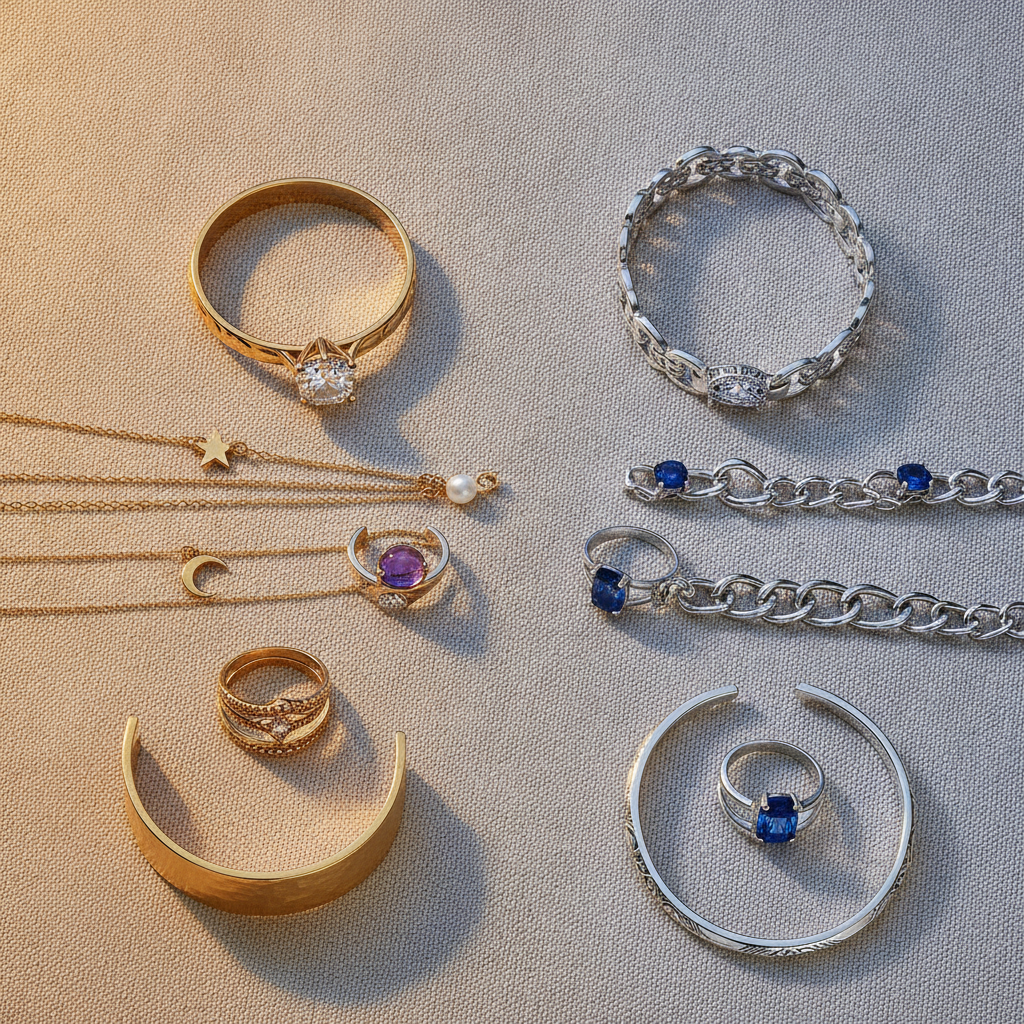
Sometimes the most direct approach is simply the best. Gather a piece of gold jewelry and a piece of silver jewelry, they don’t need to be expensive, and hold each one up to your face or wrist under natural light, one at a time.
- Notice which metal makes your skin look brighter, healthier, and more radiant.
- Notice which metal makes your skin look dull, gray, or washed out by comparison.
- If both metals look equally flattering and neither seems to clash, that’s a strong sign you have a neutral undertone.
This test works especially well when done in front of a mirror in daylight, and it’s a great final step to confirm what the previous three tests suggested. If you already have a jewelry collection, this is also a fun excuse to go through it piece by piece.
What If Your Results Don’t Match Up?
It’s common for one test to point toward “warm” while another feels ambiguous. When this happens, lean toward the results that repeated most consistently across tests, and trust the jewelry contrast test as something of a tiebreaker since it directly answers the question you’re trying to solve. Remember, too, that having a neutral undertone isn’t a failure to identify anything, it’s simply your answer, and it happens to be the most flexible one when it comes to metal choice.
Putting Your Results to Work
Once you’ve confidently identified your undertone, you’re ready to shop with real confidence instead of guesswork. Head back to our comprehensive guide on gold vs. silver and finding the metal that complements your skin tone to see exactly how your undertone translates into specific metal recommendations. And if you love wearing both gold and silver and don’t want to choose just one, our article on mixing gold and silver jewelry with styling rules for every skin tone will show you how to combine them beautifully rather than letting them clash.
Final Thoughts
Determining your skin undertone doesn’t require a professional consultation or expensive tools, just a few minutes, some natural light, and a little bit of observation. Whether you land on warm, cool, or neutral, this knowledge will save you from impulse purchases that end up sitting unworn in a drawer, and instead guide you toward jewelry that genuinely enhances your natural coloring every time you wear it.