
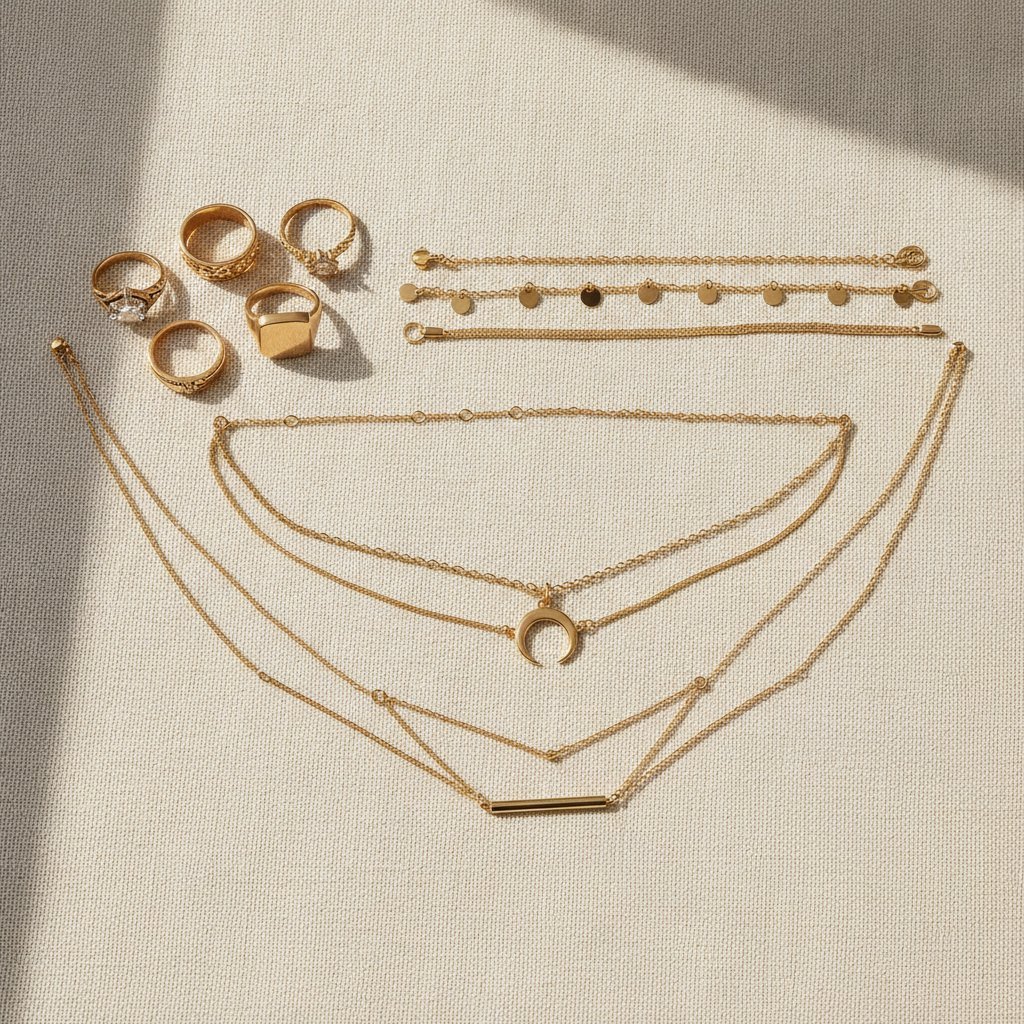
Why Your Jewelry Box Needs a Personality, Not a Personality Crisis
Choosing a signature metal tone is the single easiest decision that will make your entire jewelry collection look intentional instead of accidental. You know the drawer we’re talking about — the tangled nest of gold hoops, silver chains, and that one rose gold bracelet you bought on vacation that matches absolutely nothing else you own. A signature metal tone fixes that chaos by giving you one unifying thread to build around, so every new piece you add actually plays nicely with what’s already there.
This is the metal-tone version of picking a favorite child, except nobody’s feelings get hurt and your mornings get dramatically simpler. Once you commit, getting dressed becomes less “which metals clash today” and more “grab, layer, done.”
Start With Your Skin Tone (Science, But Make It Fun)
If you want a shortcut that actually works, let your skin’s undertone do the deciding. It’s not foolproof fashion law, but it’s a genuinely useful starting point.
- Cool undertones (pink or blue-ish veins on your wrist, you burn easily in the sun) tend to glow next to silver, white gold, and platinum.
- Warm undertones (greenish veins, you tan like it’s your job) usually look luminous in yellow gold and warm brass tones.
- Neutral undertones (you can’t tell which vein color you have, honestly relatable) are the lucky ones who can wear almost anything — rose gold especially tends to flatter neutral skin beautifully.
Still unsure? Hold a silver and a gold piece up to your face in natural light. One will make your skin look brighter and healthier; the other will make you look like you haven’t slept. That’s your answer.
But What If You Just… Love a Color?
Here’s the plot twist: skin tone matching is a guideline, not a prison sentence. If you’ve been obsessed with rose gold since 2014 and it brings you joy, wear it. A signature metal tone should reflect what makes you feel put-together and happy, not just what a color-theory chart says. Confidence is, annoyingly, the most flattering accessory of all.
The Three Contenders: Gold, Silver, and Rose Gold
Let’s give each finalist a fair shot at your jewelry box.
Gold
Warm, rich, and endlessly versatile, gold reads as classic and a little bit luxe without trying too hard. It pairs beautifully with warm skin tones but also looks fantastic as a bold contrast against cooler ones. If your style leans toward earthy, boho, or “effortlessly expensive,” gold is probably calling your name.
Silver
Crisp, modern, and a little edgier, silver tends to suit cool undertones and minimalist wardrobes. It photographs beautifully, never looks dated, and has a quiet confidence that gold’s warmer glow doesn’t always pull off. If your closet is full of black, white, and denim, silver is your soulmate.
Rose Gold
The friendly middle child of metals, rose gold flatters an enormous range of skin tones thanks to its soft, blush-pink warmth. It feels romantic without being fussy and pairs surprisingly well with both warm and cool color palettes. It’s the safest “I can’t decide” choice, and there’s zero shame in that.
Building Around One Dominant Finish
Once you’ve picked your lane, the real magic happens: everything gets easier. Building a capsule jewelry collection around one dominant metal tone means:
- You can buy pieces individually over time and trust they’ll all coordinate.
- Stacking rings, layering necklaces, and mixing bracelets requires zero decision fatigue.
- Travel packing shrinks dramatically — one metal family covers every outfit.
- Your look reads as curated, even if half your pieces came from a clearance bin.
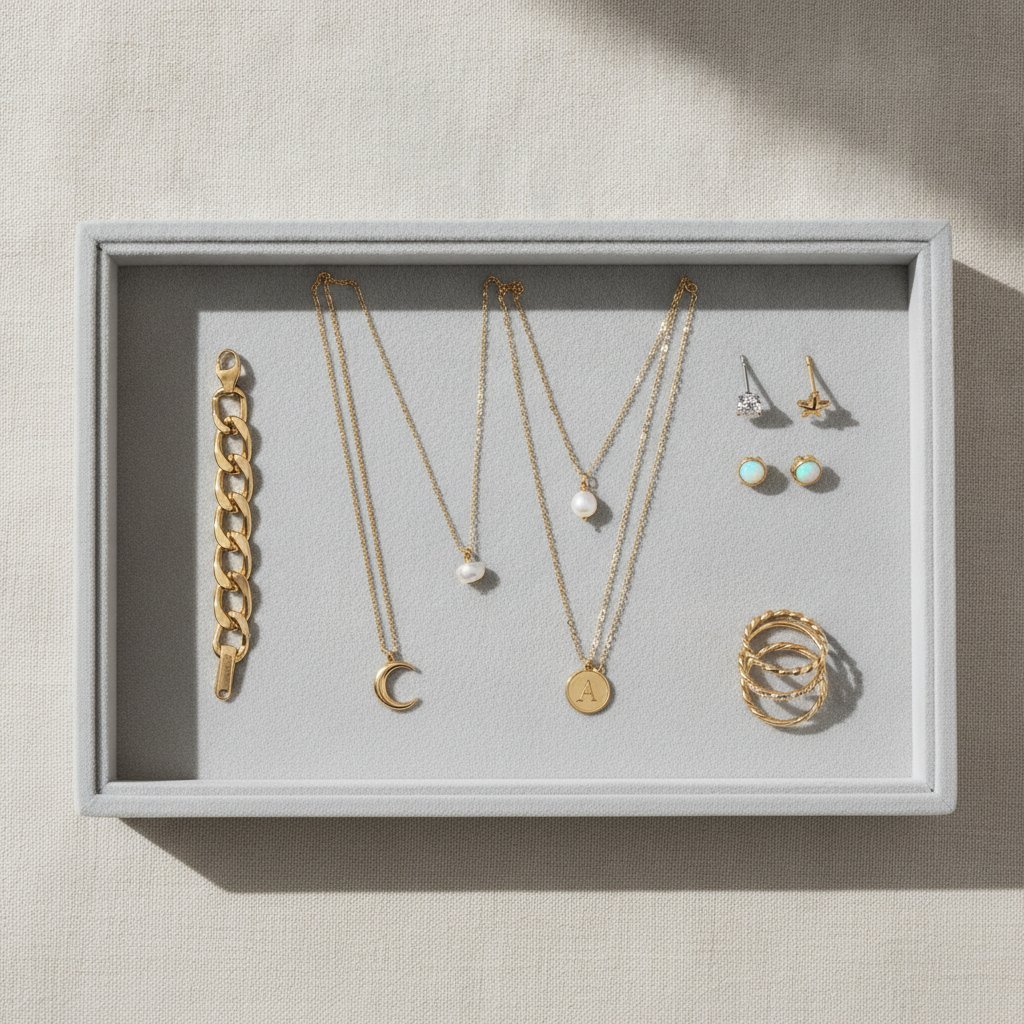
Aim for your dominant tone to make up roughly 80% of your collection. That leaves just enough room for the fun stuff — without descending back into drawer chaos. For the full framework on how this fits into a broader minimalist approach, it’s worth revisiting the ideas in our guide on Building a Jewelry Wardrobe Capsule Closet, since the signature tone is really the backbone of that whole system.
Mixing Metals Without Losing the Plot
Here’s the secret nobody tells you: having a signature metal tone doesn’t mean you’re banned from ever touching another metal again. Mixing metals intentionally is a legitimate, stylish move — as long as it looks like a choice and not an accident.
The 80/20 Rule
Keep about 80% of your visible jewelry in your signature tone, and let the remaining 20% be an intentional accent. A silver signature with one gold ring thrown into the stack doesn’t read as a mistake — it reads as a deliberate style statement.
Anchor With a Hero Piece
If you’re mixing metals, let one standout piece — a statement watch, a layered necklace, a chunky cuff — do the “mixed metal” talking, while everything else stays quietly loyal to your signature tone. This keeps the eye focused instead of overwhelmed.
Repeat the Accent Metal
If you add a touch of gold to your mostly-silver stack, echo that gold somewhere else — maybe your watch hardware or a belt buckle. Repetition makes mixed metals look curated rather than coincidental.
Signs You’ve Picked the Right Signature Tone
- You reach for the same metal family instinctively when shopping, without even thinking about it.
- Your jewelry drawer no longer looks like a tiny, glittery crime scene.
- You can pack for a trip in under two minutes because everything matches by default.
- Compliments start rolling in on how “put-together” your look seems — little do they know it’s just smart systems, not extra effort.
Final Thoughts: Commit, But Keep It Fun
Choosing a signature metal tone isn’t about restricting your style — it’s about giving it a backbone. Whether you land on warm gold, cool silver, or the ever-charming rose gold, the goal is the same: fewer decisions, more confidence, and a jewelry collection that actually works together instead of fighting for attention. Pick your metal, build around it with intention, and let every future jewelry purchase be just a little bit easier than the last.
One thought on “How to Choose a Signature Metal Tone”