For years, fashion rules insisted that gold and silver should never mingle. Thankfully, those rigid days are over. Mixing metals and colors is one of the easiest ways to add personality and depth to your look — but done carelessly, it can also make an outfit feel disjointed. The good news? Once you understand a few simple principles about undertones and color harmony, mixing metals becomes second nature rather than a gamble.
This guide breaks down exactly how to mix metals in jewelry, why certain combinations work while others clash, and how to build outfits that look intentional every time.
Why Mixed Metals Sometimes Clash
Clashing usually happens for one of two reasons: the metals fight for attention instead of complementing each other, or the undertones of your metals and clothing don’t align. A cool-toned silver necklace paired with warm-toned gold earrings isn’t inherently wrong, but if your outfit’s color palette leans strongly warm or cool, an unbalanced mix can look accidental rather than styled.
The fix isn’t to avoid mixing altogether — it’s to mix with intention, using a dominant metal, complementary undertones, and thoughtful placement.
Understand Undertones First
Every metal has an undertone, and recognizing it is the foundation of successful mixing.
- Warm metals: Yellow gold, rose gold, and brass have warm, golden undertones that pair beautifully with earthy or warm-toned outfits.
- Cool metals: Silver, white gold, and platinum have cool, blue-based undertones that complement jewel tones, pastels, and monochrome looks.
When mixing metals, the goal is to let one undertone lead while the other plays a supporting role. This creates contrast without competition.
The 70/30 Rule
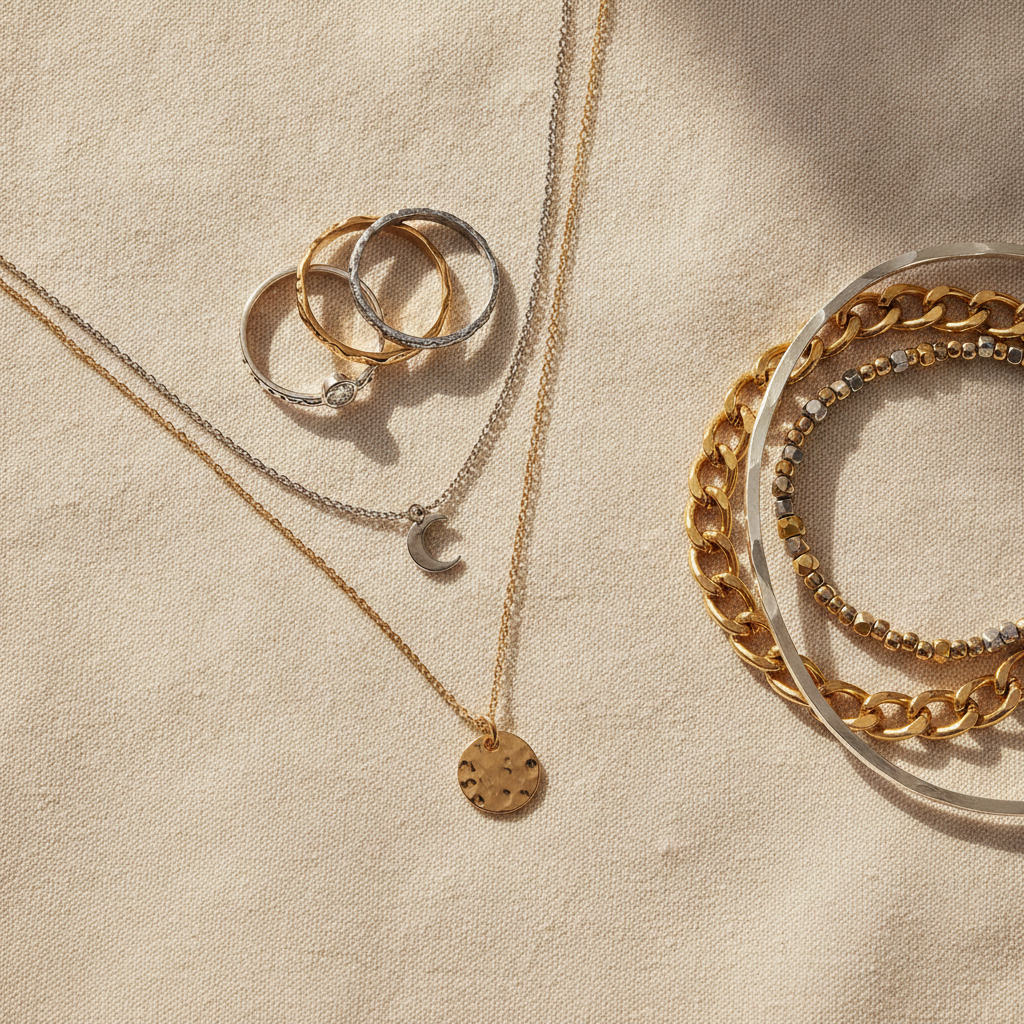
A simple trick stylists swear by: choose one metal to dominate roughly 70% of your jewelry, and let the second metal appear in about 30%. For example, wear a gold necklace and gold bracelet as your anchor pieces, then add a single silver ring for contrast. This ratio keeps the look cohesive rather than scattered.
Use the Color Wheel to Guide Colored Accessories
Mixing metals is only half the equation — colored accessories like stones, enamel, or beaded pieces add another layer. The color wheel is your best friend here.
- Complementary colors (opposite on the wheel, like blue and orange) create bold, eye-catching contrast — great for statement pieces.
- Analogous colors (next to each other, like teal and green) create a soft, harmonious flow, ideal for everyday wear.
- Neutral anchors like black, white, or beige can bridge any color combination, making mismatched tones feel intentional.
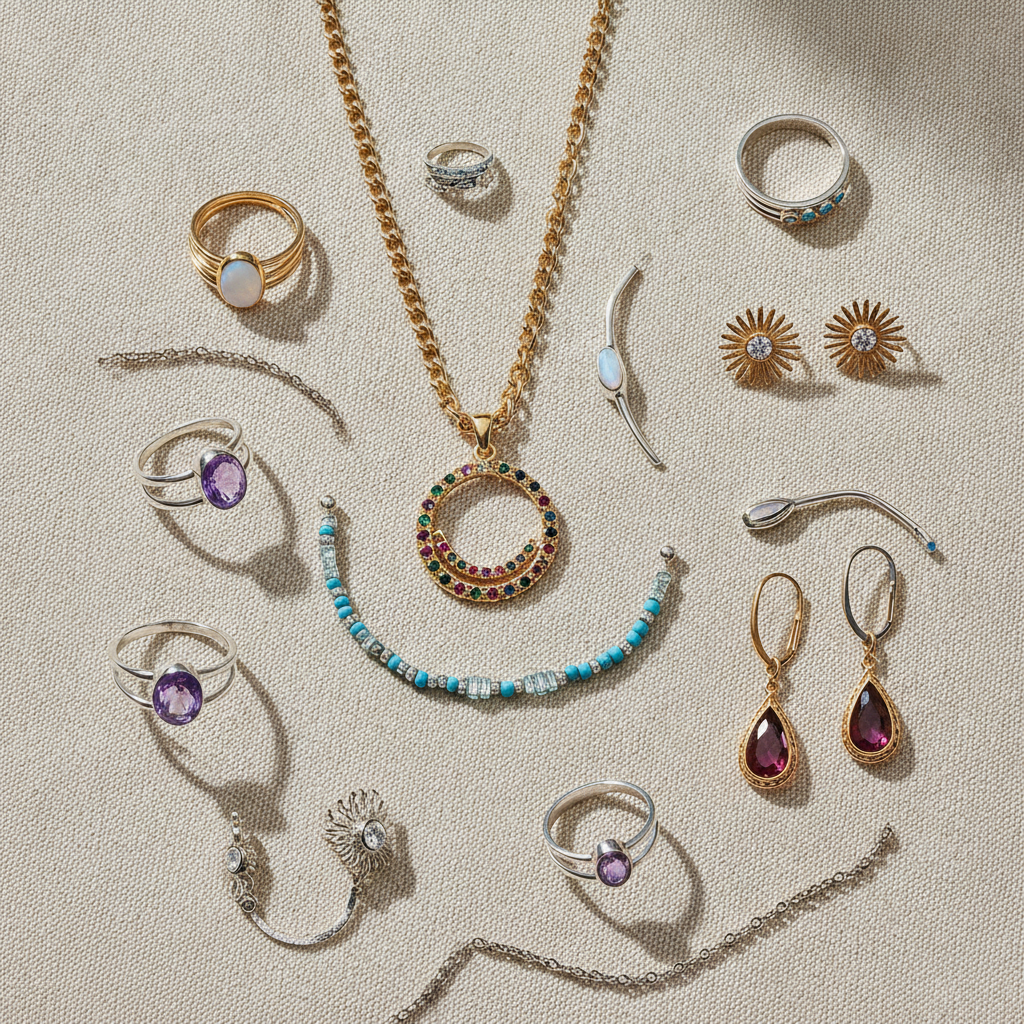
When combining colored jewelry with mixed metals, let the color do the talking and keep the metal tones simple — one warm, one cool — so the palette doesn’t become overwhelming.
Step-by-Step: How to Mix Metals Without Overthinking It
1. Pick a Dominant Metal
Decide which metal will anchor your look based on your outfit’s undertone or the piece you love most that day.
2. Add a Secondary Metal in a Small Dose
Introduce the second metal through a smaller accessory — a ring, a thin bracelet, or stud earrings — rather than another statement piece.
3. Layer with a Unifying Element
A piece that combines both metals, like a two-tone watch or a chain with mixed links, acts as a visual bridge and makes the pairing feel deliberate.
4. Coordinate with Your Outfit’s Undertone
Match your dominant metal to your clothing’s warm or cool base color to keep everything visually connected.
Real Outfit Examples
- Casual daytime: A silver watch, gold hoop earrings, and a delicate gold necklace paired with a cream sweater and blue jeans — silver plays a supporting role while gold leads.
- Office look: A rose gold watch, silver stud earrings, and a neutral blazer create a polished, understated mix.
- Evening out: A statement gold cuff, a cool-toned sapphire ring, and small silver earrings bring warmth and richness together for a night-out glow.
Quick-Reference Cheat Sheet
- Gold + Silver: Use the 70/30 rule; add a mixed-metal piece to bridge them.
- Gold + Jewel Tones (emerald, sapphire, ruby): Warm gold makes rich colors pop — perfect for evening looks.
- Silver + Pastels: Cool silver enhances soft blues, lavenders, and pinks for a fresh, airy feel.
- Rose Gold + Neutrals: Rose gold softens black, white, and beige outfits without overpowering them.
- Mixed Metals + Neutral Colors: When unsure, let neutral clothing colors carry the mix — it’s nearly foolproof.
Mixing metals and colors mistake is one of the most common styling missteps, but as covered in our guide to 3 Common Accessory Mistakes (and How to Fix Them Effortlessly), small adjustments can instantly elevate your look. And once you’ve nailed your everyday mixing skills, you can take it further by learning how to adapt your jewelry and bag choices for specific settings in our guide to Occasion-Appropriate Accessories: How to Match Jewelry and Bags to Any Event.
Final Thoughts
Mixing metals and colors doesn’t have to feel like a gamble. By understanding undertones, applying the 70/30 rule, and using the color wheel as your guide, you can create combinations that look curated rather than accidental. The key is balance: let one metal and one color story lead, and use smaller accents to add depth. With a little practice, mixing metals will become one of your most reliable styling tools.