Accessorizing with confidence often comes down to one skill: knowing how to mix textures and patterns without your outfit feeling chaotic. Whether it’s a chunky knit scarf paired with a smooth leather bag, or a polka-dot belt against a striped top, the right combination can elevate a simple outfit into something memorable. This guide breaks down the fundamentals so you can start experimenting with confidence, even if you’ve never done it before.
Why Mixing Textures and Patterns Matters
Accessories are the easiest way to add personality and depth to an outfit without changing your entire wardrobe. A single-texture, single-pattern look can feel flat, while a thoughtfully mixed combination adds visual interest and shows intentional styling. The key word here is intentional — random mixing often looks messy, but a few guiding principles can turn any combination into a polished statement.
Core Principle 1: Balance Is Everything
Balance means making sure no single element overwhelms the rest of your look. If you’re wearing a bold, busy pattern like leopard print, pair it with accessories that have simpler textures, such as a smooth leather belt or matte gold jewelry. Conversely, if your outfit is fairly plain, this is your chance to introduce more texture or pattern through accessories like a woven bag or a textured scarf.
A simple rule of thumb: if one piece is loud, let everything else whisper. This principle is explored in more depth in our guide on How to Pair Bold Patterns with Chunky Textures Without Overdoing It, which covers how to handle statement pieces specifically.
Core Principle 2: Play with Scale
Scale refers to the size of the pattern or the texture’s visual weight. Mixing a large-scale pattern (like an oversized floral) with a small-scale one (like a fine houndstooth) tends to work better than combining two patterns of similar size, which can compete for attention. The same logic applies to textures: a chunky knit paired with something delicate, like fine lace or thin metallic chains, creates contrast that feels curated rather than accidental.
Quick Scale-Pairing Examples
- Large floral scarf + small stud earrings
- Chunky knit gloves + delicate thin bracelet
- Wide-brim straw hat + fine gold necklace
Core Principle 3: Anchor with Color
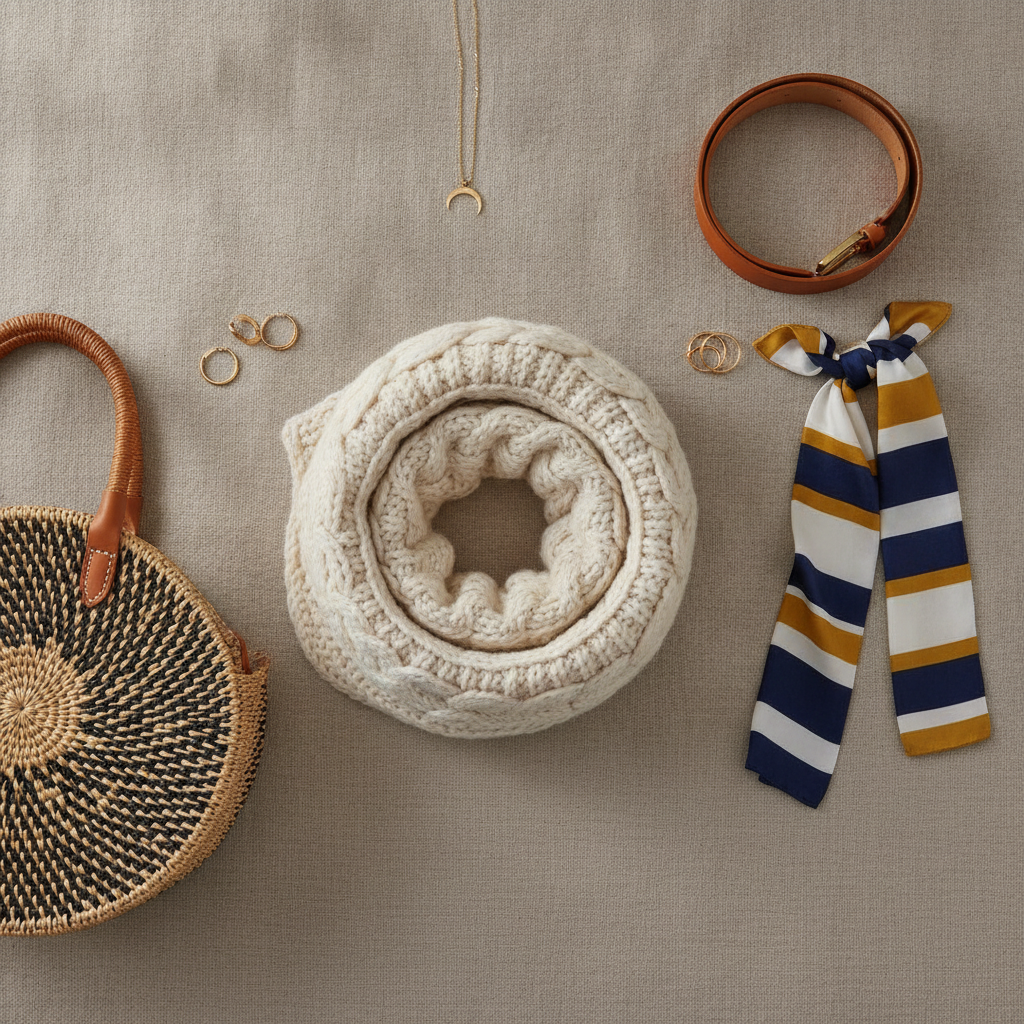
When you’re mixing multiple textures and patterns, color becomes your unifying thread. Choose one or two dominant colors that repeat across your accessories, even if the patterns themselves are different. For example, a striped scarf in navy and white can be paired with a tortoiseshell hair clip and a navy leather bag — the patterns differ, but the color story ties everything together.
This same anchoring technique applies when working with metallic accents, which have their own set of rules. For a deeper dive, check out Mixing Metallics and Textiles: A Simple Formula for Layered Accessories.
Practical Formulas for Beginners
If the idea of mixing patterns and textures still feels intimidating, start with these tested formulas:
- One pattern + one texture: A printed scarf with a smooth leather belt keeps things simple but interesting.
- Two textures, no pattern: A woven straw bag with a chunky knit scarf, both in neutral tones.
- Pattern + metallic: A striped top with gold hoop earrings and a metallic clutch.
- Monochrome mixing: Stick to one color family but vary the textures — suede, silk, and knit all in shades of camel, for instance.
Common Mistakes to Avoid
Even with good intentions, beginners often run into a few predictable pitfalls. Avoid combining more than two bold patterns at once, as this quickly becomes overwhelming. Be cautious with clashing undertones — a warm-toned pattern paired with a cool-toned texture can look off even if the colors technically match. Finally, don’t forget about proportion: pairing several bulky, textured items together (like a chunky scarf, thick bracelets, and a heavy bag) can make an outfit feel weighed down rather than layered.
Building Your Own Mixing Framework
As you get more comfortable, try starting with one anchor piece — like a patterned scarf or a textured bag — and build the rest of your accessories around it using the balance, scale, and color principles above. Over time, you’ll develop an instinct for what works, and mixing textures and patterns in accessories will feel less like a formula and more like second nature.
Final Thoughts
Mastering the art of mixing textures and patterns doesn’t require an expensive wardrobe overhaul — it just requires a shift in how you think about the accessories you already own. Start small, use the formulas above as a safety net, and don’t be afraid to experiment. With practice, you’ll find your own signature way of combining pieces that feels both polished and personal.